
AI in ECE: Key Questions for Canadian Educators Before Adopting Tools
Canadian early childhood educators face a challenge: interpreting answers to critical questions about specific AI tools in an unregulated ECE landscape. This guide offers a practical framework to evaluate AI tools against provincial ECE frameworks and federal privacy laws.

A Practical Guide: Key Questions Canadian Educators Should Ask Before Adopting AI Tools
A Practical Guide: Key Questions Canadian Educators Should Ask Before Adopting AI Tools
While the global AI in education market is growing quickly, the real challenge for Canadian early childhood educators isn't understanding AI's growth, but rather interpreting answers to critical questions about specific tools within a largely unregulated Canadian ECE landscape. This guide provides a practical framework for Canadian educators to evaluate AI tools, moving beyond basic feature lists to weigh trade-offs against provincial ECE frameworks and federal privacy laws like PIPEDA.
The sheer volume of available AI tools, from AI-assisted observation platforms like YochienAI to adaptive learning games, can feel overwhelming to a senior kindergarten teacher in British Columbia. Unlike K-12, specific AI regulations tailored for early childhood education remain nascent across Canada as of 2024. This regulatory gap demands a proactive and informed approach from educators, not just a reactive one.
Adopting AI in ECE requires more than knowing "what is AI"; it demands a clear "how to evaluate and implement" mindset. Educators need to confidently interpret vendor claims, assess alignment with play-based learning principles, and scrutinize data privacy practices. This process allows for thoughtful integration that supports child well-being and enhances, rather than detracts from, the educator's essential role.
Understanding the 'Why': Aligning AI with Your ECE Program Goals
Many Canadian early childhood educators feel overwhelmed by the sheer volume of AI tools entering the market, often leading to adoption for technology's sake rather than genuine need. Before evaluating specific platforms, a crucial first step for any ECE program is to clearly define its existing challenges and educational philosophy. This foundational work ensures that AI integration is purposeful, directly supporting the center's mission and freeing up educators' time for more meaningful interactions with children, rather than adding another layer of complexity to already busy schedules. For instance, a kindergarten teacher might identify that a large part of the working day goes to observational notes and parent communication.g., 2020-2023) indicate consumes a substantial portion of educator time.
Aligning AI with your center’s core values means asking if a tool genuinely enhances the holistic development emphasized in Canadian frameworks like Ontario's How Does Learning Happen? For example, if a program prioritizes play-based learning and social-emotional growth, an AI tool should support these objectives, perhaps by streamlining observation to give educators more direct interaction time, rather than introducing screen-based activities that detract from it. The goal isn't to replace the human element but to augment it, ensuring the educator remains central to the learning process. Tools like YochienAI's parent updates demonstrate how AI can facilitate communication without diminishing the educator's interpretive role.
By articulating these "why" questions upfront, early childhood educators can narrow the vast array of available AI tools and make informed choices that truly benefit their programs, setting the stage for A Practical Guide: Key Questions Canadian Educators Should Ask Before Adopting AI Tools in the Early Childhood Classroom. This clarity then directly informs the next critical step: evaluating the ethical implications of any chosen AI solution.
Ethical Foundations: Prioritizing Child Well-being, Privacy, and Equity
Ethical Foundations: Prioritizing Child Well-being, Privacy, and Equity
The most compelling AI tools for early childhood education often present an ethical tightrope walk, demanding that educators prioritize child well-being over technological novelty. Adopting AI without a rigorous ethical review risks compromising children's privacy, perpetuating biases, or even stunting crucial developmental milestones.Building Trust Through Transparency
- Clear Data Practices: Reputable AI tools explicitly detail what data they collect (e.g., observation notes, activity choices, not personally identifiable biometric data), how it's stored, and who accesses it. This transparency is vital, especially since many parents and educators worry about ed-tech data privacy.
- Canadian Privacy Compliance: Tools built for the Canadian context will clearly state adherence to federal PIPEDA and relevant provincial laws like Alberta's PIPA or Quebec's Act respecting the protection of personal information in the private sector.
- Explainable AI (XAI): AI systems that can articulate *why* they suggest a particular activity or highlight a developmental observation (e.g., "The AI noted repeated attempts at block stacking, indicating developing fine motor skills") build confidence and allow educators to verify insights.
- Developmental Safeguards: Ethically designed AI enhances, rather than replaces, human interaction. For example, YochienAI assists educators with observation, freeing them for more direct engagement, rather than diverting child attention to screens.
Red Flags and Ethical Risks
- Vague Privacy Policies: A lack of specific details on data encryption, retention periods, or third-party data sharing constitutes a significant red flag. If a vendor cannot clearly explain their data lifecycle, pause.
- Algorithmic Bias: AI trained on unrepresentative datasets can inadvertently perpetuate biases, potentially misidentifying developmental patterns in children from diverse cultural or linguistic backgrounds. For instance, a speech recognition tool not trained on Canadian English accents might misinterpret a child's language.
- Screen Time Overload: Tools that demand excessive screen interaction from young children risk displacing vital play-based learning and social-emotional development. The goal is to support educators, not entertain children with screens.
- Lack of Human Oversight: Any AI tool that claims fully autonomous decision-making in a child's learning journey, without requiring educator review and intervention, undermines the professional judgment central to Canadian ECE.
Pedagogical Alignment: Does the AI Tool Support Canadian ECE Principles?

Pedagogical Alignment: Does the AI Tool Support Canadian ECE Principles?
The true test of any AI tool in early childhood education isn't its technical sophistication, but whether it genuinely enhances, rather than detracts from, established play-based, child-centred learning. Many AI tools, especially those designed for older students, risk turning active exploration into passive screen time, a clear misalignment with Canadian provincial frameworks like Ontario's *How Does Learning Happen?* Educators must scrutinize if a tool promotes hands-on engagement or merely presents information, ensuring it supports the child's agency in learning. Evaluating an AI solution requires asking specific questions about its integration with your program’s philosophy. Does it allow for customization to individual children's evolving interests, or does it impose a rigid, pre-set curriculum? For instance, an AI-assisted observation tool like YochienAI helps educators record and analyze observations, providing insights into developmental progress without dictating the play itself. Such tools can free up educator time, which recent studies (2020-2023) suggest often gets consumed by administrative tasks, allowing more direct interaction with children. Furthermore, consider the tool's impact on social interaction. Does it facilitate collaborative play and peer-to-peer engagement, or does it isolate children with individual devices? A developmentally appropriate tool for a four-year-old in a British Columbia daycare, for example, would feature intuitive, visual interfaces, avoiding complex text or abstract concepts that could overwhelm cognitive capacities.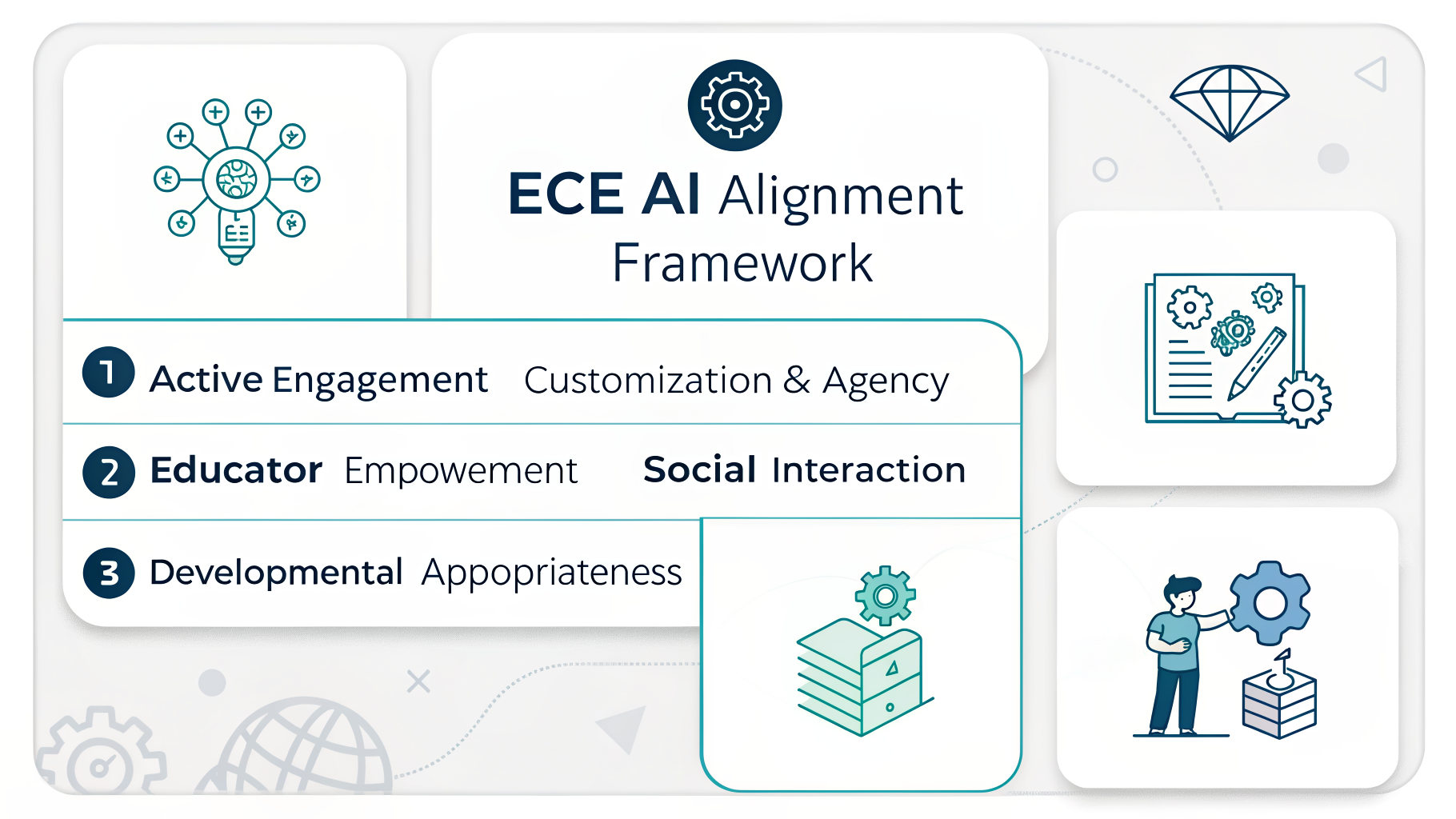
Vendor Vetting: Key Questions for AI Tool Providers and Their Practices
Vendor Vetting: Key Questions for AI Tool Providers and Their Practices
Many AI tools promise efficiency, but a vendor's practices often hide critical risks. Before integrating any new technology, especially those involving children's data, Canadian educators must scrutinize the providers themselves. A robust vetting process ensures that a tool aligns with your centre's values and legal obligations, forming a core part of A Practical Guide: Key Questions Canadian Educators Should Ask Before Adopting AI Tools in the Early Childhood Classroom.
Start by demanding transparency on data security and ownership. For instance, ask about encryption standards and where data is physically stored. Provincial privacy laws, like Alberta's FOIP or Ontario's FIPPA for public sector institutions, often mandate data residency within Canada for sensitive information. A vendor should clearly state their adherence to these, much like YochienAI outlines its security protocols, including data storage in Canada, on its security page.
Beyond security, understand who owns the data generated by the tool. Will the vendor use observations, photos, or learning progress for training their AI models? This is a critical distinction. Clear, understandable terms of service and privacy policies, such as those found on yochienai.ca/privacy, are non-negotiable. Many parents and educators express significant concerns about data privacy with educational technology, underscoring the need for explicit answers here. Finally, inquire about the vendor's commitment to ethical AI development, including how they mitigate algorithmic bias and ensure the tool remains transparent in its operations, rather than a "black box" solution.
Practical Implementation: Integration, Training, and Ongoing Support
Even the most meticulously chosen AI tool for early childhood education will fail without a clear plan for its integration into daily operations. Many Canadian ECE programs overlook the practicalities of implementation until after procurement, leading to frustration and underutilization. A thoughtful approach to integration, training, and ongoing support ensures that new technologies genuinely enhance the learning environment.
Plan Integration
Assess how an AI tool, such as an AI-assisted observation platform like YochienAI, fits into existing digital ecosystems. Will it integrate with your current parent communication app, like HiMama, or your provincial child care management system? Minimize disruption by choosing tools that complement, rather than overhaul, established workflows. A senior kindergarten teacher in Halifax, for instance, needs to easily export observation notes, not re-enter them.
Develop Comprehensive Training
Design training programs that address diverse tech literacy levels among educators. A new ECE graduate might be comfortable with tablets, while a seasoned educator nearing retirement may need more hands-on guidance. Offer both initial workshops and follow-up sessions. Industry reports indicate that insufficient training is a primary reason for low adoption rates of new educational technologies.
Establish Clear Support Protocols
Educators need immediate assistance when technology glitches. Define who to contact (internal IT, vendor support) and expected response times. A clear troubleshooting guide or a dedicated support person can prevent minor technical issues from becoming major roadblocks during a busy morning in a Calgary preschool.
Allocate for Ongoing Professional Development
AI tools evolve. Budget for continuous professional development to keep staff updated on new features and best practices for ethical, developmentally appropriate use. This ensures educators remain proficient and confident, fostering a culture of continuous learning around new technologies.
Assessing Impact: Monitoring and Evaluating AI Tool Effectiveness Post-Adoption

Assessing Impact: Monitoring and Evaluating AI Tool Effectiveness Post-Adoption
Adopting an AI tool is not the finish line; it's the starting gun for continuous monitoring. Many educators focus intensely on pre-adoption questions, yet overlook the critical need to assess an AI tool's real-world impact and developmental alignment in their classrooms. Without clear metrics and ongoing evaluation, even a well-intentioned choice can fall short, or worse, inadvertently detract from child well-being.
Before any AI tool, such as an AI-assisted observation platform, enters a Quebec preschool program or an Ontario JK/SK classroom, establish clear benchmarks for success. This might include observing an improvement in administrative efficiency for kindergarten teachers, measured by time spent on daily reports, or a qualitative increase in child-initiated play over a three-month period. Collecting feedback from early childhood educators, parents, and even the children themselves—through observation of their engagement and comfort—provides crucial insights into the tool's lived experience.
This highlights a core tension: rapid market growth for AI tools meets significant user apprehension. While the AI in education market is expected to grow considerably in the coming years, many parents and educators express significant concerns about data privacy. This gap underscores why continuous monitoring is non-negotiable. Educators in mid-sized urban daycares using AI for parent communication, for example, must regularly review anonymized engagement data, always with strict adherence to privacy protocols like PIPEDA, to ensure the tool genuinely enhances connection without compromising personal information.
The evaluation must extend beyond efficiency.
Red Flags and Warning Signs: What to Avoid When Considering AI in ECE
Red Flags and Warning Signs: What to Avoid When Considering AI in ECE
Many AI tools, while promising, carry hidden risks that can undermine early childhood education principles. A significant red flag emerges when vendors lack transparency about how their artificial intelligence models are trained or how they manage sensitive child data. This opacity is a major concern, especially since many Canadian parents and educators worry about data privacy and security with educational technology. For instance, if a vendor cannot clearly explain its data anonymization process or where its servers are located, it signals a potential privacy risk for children in a British Columbia daycare or an Ontario kindergarten.
Another immediate warning sign is an AI tool that positions itself as a replacement for human educators or essential child-to-child interaction. Canadian ECE frameworks, like Nova Scotia's Capable, Confident, and Curious, emphasize play-based learning and the critical role of responsive relationships. An AI tool promoting passive consumption or excessive screen time, such as one requiring a preschooler in Calgary to spend 30 minutes daily on a tablet for "personalized learning," directly conflicts with these values. Tools like Magic School or Curipod are designed to augment, not replace, an educator's planning or content creation, freeing up time for direct interaction, not reducing it.
The absence of Canada-specific privacy policies also raises serious concerns during A Practical Guide: Key Questions Canadian Educators Should Ask Before Adopting AI Tools in the Early Childhood Classroom. Generic terms of service that don't explicitly reference federal acts like PIPEDA or provincial privacy legislation, such as Alberta's PIPA, indicate a vendor may not understand or comply with Canadian legal requirements. Furthermore, be wary of tools with high costs but minimal training or ongoing support; successful integration of any new technology, especially AI, demands robust professional development for educators in a Quebec pre-kindergarten setting.
Recognizing these red flags early helps educators filter out unsuitable options and focus on tools that genuinely support Canadian early learning principles, moving towards a more confident evaluation of ethical and pedagogical alignment.
Making the Decision: A Step-by-Step Framework for Confident AI Adoption
Navigating the expanding landscape of AI tools for early childhood education often feels overwhelming, not because of a lack of information, but due to the sheer volume and the challenge of interpreting it. Many educators struggle to weigh competing claims and align them with the unique needs of their programs. This framework offers a structured path to move from asking questions to making confident decisions.
Needs Assessment & Goal Setting
Begin by clearly articulating the specific problem an AI tool will solve. For instance, if your educators in a Vancouver daycare spend a large share of their day on administrative tasks, an AI-assisted observation tool like YochienAI could reduce that burden, freeing up time for direct child interaction. Ensure any solution aligns with Canadian ECE values like play-based learning.
Ethical & Pedagogical Review
Evaluate tools against your ethical checklist. Does the tool comply with provincial privacy legislation like Alberta's FOIP Act? Does it support child-centred, holistic development, or does it push a screen-time heavy, didactic approach? Prioritize tools that enhance, rather than replace, human connection.
Vendor & Practical Vetting
Scrutinize vendors for transparency regarding data handling and security. Ask about their support structure—will a team be available to assist a junior educator in rural Nova Scotia? Assess integration: can the tool easily connect with existing communication platforms used by parents?
Pilot & Feedback Loop
If possible, implement a small-scale pilot. A single classroom in a large Montreal childcare centre could test a new AI-powered story generator for a month. Gather feedback from educators, children, and parents on usability, impact, and any unforeseen issues. This informs the final decision process for the entire centre.
Frequently Asked Questions About AI in Canadian Early Childhood Education
Navigating the emerging landscape of artificial intelligence in early childhood education can feel overwhelming for Canadian educators. Many common questions arise, often touching on privacy, pedagogy, and practical application. This quick reference addresses some of the most pressing concerns.
Quick Answers for Canadian ECE Educators
You must comply with Canada's federal PIPEDA (Personal Information Protection and Electronic Documents Act) and relevant provincial legislation, such as Alberta's PIPA or Ontario's PHIPA, if applicable. Always confirm a vendor's Canadian data residency and explicit compliance statements.
Prioritize tools that enhance educator capacity for observation, streamline administrative tasks like documentation, or offer insights that inform play, rather than those that direct or replace child-led play. For example, tools like YochienAI assist with observation notes, freeing educators for direct interaction.
As of 2024, specific AI regulations tailored for early childhood education remain largely nascent across Canadian provinces. This reality underscores the need for a proactive, educator-led framework, such as A Practical Guide: Key Questions Canadian Educators Should Ask Before Adopting AI Tools in the Early Childhood Classroom.
A significant red flag is any lack of transparency from a vendor regarding data handling, security protocols, or how their AI generates recommendations. If they cannot explicitly detail adherence to Canadian privacy standards, proceed with extreme caution.
Thoughtfully implemented AI can automate time-consuming administrative tasks, such as generating observation summaries or facilitating parent communication. Studies from 2020-2023 indicate educators spend substantial time on these tasks, suggesting AI tools, like those offered by YochienAI for schools, could free up significant time for direct child engagement.
The absence of explicit Canadian AI guidelines for ECE places a greater responsibility on educators and administrators to scrutinize tools thoroughly.
Frequently Asked Questions
What factors should Canadian ECE teachers consider before using AI?
How can Canadian ECE programs ensure AI tools are ethical and private?
Is AI compatible with Canadian early childhood education principles?
Can AI tools be effectively integrated into a Canadian ECE classroom?
Why is vendor vetting important for AI in Canadian ECE?
Keep reading
All articles →
Human-Centred AI in Daycare: One Day, Rules, Sample Policy
Human-centred AI in an early learning centre is a working rule: software can assist, but a named educator decides every choice about a child. This guide shows how that plays out day to day, from reviewing automated reports to writing a short family-friendly policy.
A Practical Checklist for Canadian ECEs Evaluating AI Tools
Most AI guidance treats every tool the same way, which is why evaluations stall. This checklist sorts each tool into a lane first, so Canadian ECEs can decide what to ask vendors and when AI belongs in the classroom.

Putting Children First: A Parent's Guide to Human-Centred AI in Canadian ECE
The true irony of "putting children first" in ECE isn't protecting children from AI, but ensuring they aren't passive data points. This involves designing AI tools that prioritize a child's holistic development, well-being, and safety in the unique Canadian context.