

Your AI Readiness Checklist: Essential Questions for Canadian ECEs Before Integrating New Tools
The real challenge for Canadian ECEs isn't just selecting AI tools, but understanding if their program is truly ready to implement them ethically and effectively. This article offers a structured framework to assess preparedness and identify critical gaps before integration.

Introduction: Navigating AI Integration in Canadian ECEs
Introduction: Navigating AI Integration in Canadian ECEs
While the global AI in education market projects a robust compound annual growth rate (CAGR) exceeding 20% between 2023-2028, the real challenge for Canadian early childhood educators isn't merely selecting a tool, but understanding if their program is truly ready to implement it ethically and effectively. Many ECEs feel overwhelmed by the initial steps, with some reports indicating up to 45% of early educators feel unprepared for new tech. This article offers Your AI Readiness Checklist: Essential Questions for Canadian ECEs Before Integrating New Tools, providing a structured framework to assess preparedness and identify critical gaps.
The common fear of choosing inappropriate or non-compliant AI tools often paralyzes Canadian ECE leaders. Instead of evaluating tools in isolation, a proactive assessment of an organization's internal landscape becomes the crucial first step. This 'AI Readiness Scorecard' is specifically designed to navigate the unique Canadian context, from provincial regulations to the principles of Canada's Digital Charter, which emphasizes privacy and control over personal data.
By focusing on pre-implementation readiness, ECE programs can confidently answer essential questions about infrastructure, ethics, data privacy, and staff training. This structured approach ensures that any future AI integration is not just innovative, but also compliant, effective, and truly beneficial for children and educators alike, mitigating risks before significant investments are made.
Why AI Readiness is Non-Negotiable for Canadian ECEs
Proactive AI readiness is not merely about adopting novel technology; it's about ensuring responsible, impactful, and sustainable integration that truly benefits children and educators. Understanding the 'why' sets the stage for a successful journey through Your AI Readiness Checklist: Essential Questions for Canadian ECEs Before Integrating New Tools.
Why AI Readiness Matters for Canadian ECEs
Without readiness, new tools often sit unused or misused, leading to financial loss. For instance, a daycare in Saskatoon that rushed to purchase an AI-powered attendance system without staff training found it took three times longer to implement than anticipated.
Readiness helps ECEs proactively address privacy and bias concerns. About 60% of educators globally express privacy concerns with AI, highlighting the need for clear protocols before integrating tools like AI-assisted observation platforms.
Research from the MIT Media Lab emphasizes that AI tools should augment, not replace, human educators. Readiness ensures tools like YochienAI are selected and used to enhance a senior kindergarten teacher's insights, not to automate their professional judgment.
The global AI in education market is projected for significant growth, with a compound annual growth rate (CAGR) of 20%+ expected between 2023-2028. Readiness positions your program to adapt and thrive, staying relevant for families in Vancouver and beyond.
When educators feel prepared, they embrace change. Conversely, industry reports indicate that roughly 45% of early educators feel overwhelmed by technology changes, leading to resistance if readiness isn't prioritized.
A structured approach to AI readiness enables Canadian ECE programs to move
Assessing Your Program's Digital Infrastructure and Technical Capacity
Before introducing any AI tool, even something as straightforward as an AI-assisted observation platform like YochienAI, Canadian ECE programs must objectively assess their existing digital infrastructure and technical capacity. Overlooking this foundational step often leads to frustration and underutilized investments, as roughly 45% of early educators report feeling overwhelmed by technological changes, according to industry surveys.
Digital Infrastructure & Technical Capacity Checklist
Do all necessary areas, from classrooms to administrative offices, have reliable, high-speed internet? Cloud-based AI tools, like those for generating daily reports, require stable connectivity to function without interruption.
Are there enough up-to-date tablets or computers for educators? Can these devices run new software without significant lag? An older tablet might struggle with real-time observation tools, impacting efficiency.
How will new AI tools integrate with your existing platforms (e.g., parent communication apps, student information systems)? Avoid conflicts that create extra work for staff.
Is there readily available IT support, either in-house or outsourced, for setup, troubleshooting, and ongoing maintenance? A senior kindergarten teacher in Edmonton shouldn't spend precious planning time debugging software.
Differentiate requirements based on the AI's function. An administrative AI assisting with scheduling has different demands than a child-facing interactive learning application, which might need specialized hardware or robust network security.
"We learned the hard way that a great new app is useless if your Wi-Fi keeps dropping in the toddler room. Infrastructure comes first." — daycare director, Vancouver Island
This pre-assessment is a crucial component of Your AI Readiness Checklist: Essential Questions for Canadian E
Ethical AI and Data Privacy: Your Program's Preparedness Checklist
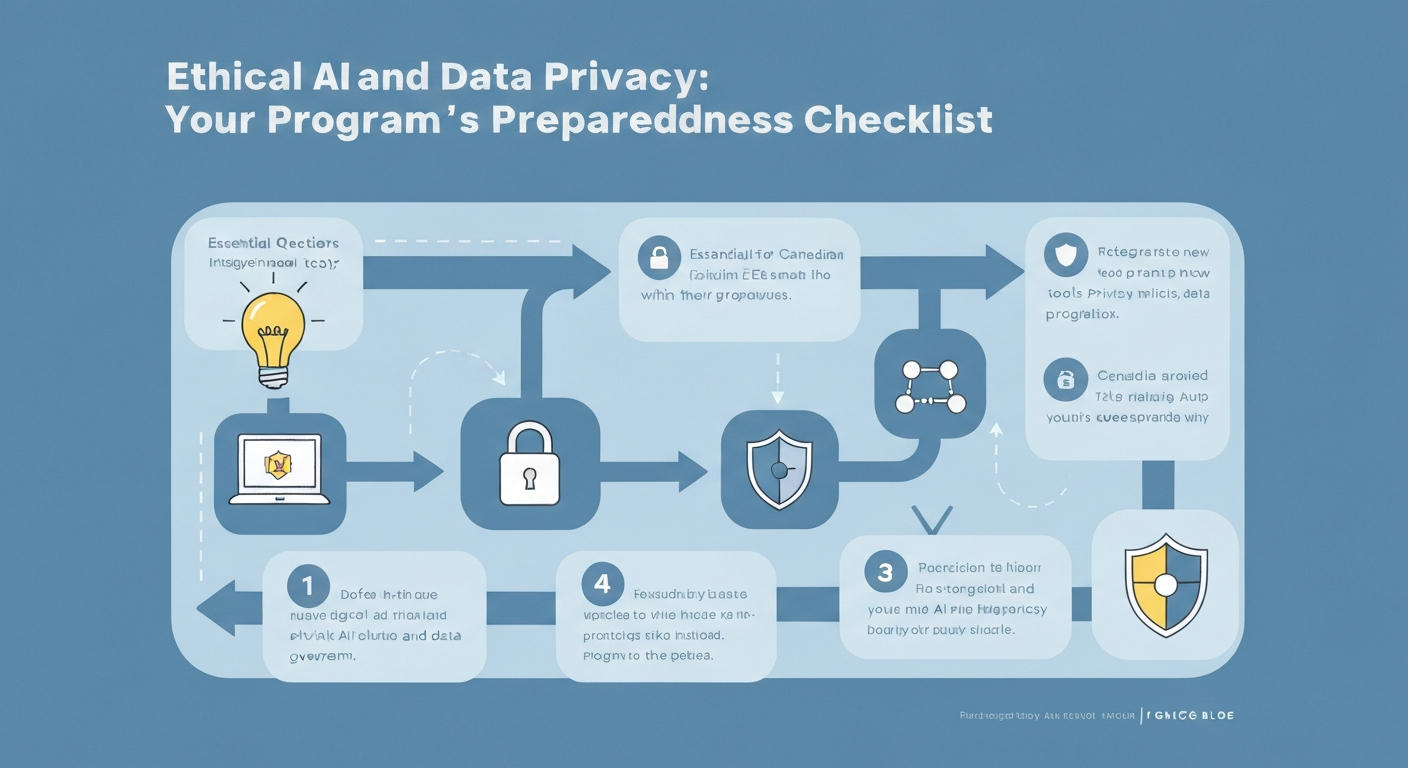
Ethical considerations and robust data privacy protocols are non-negotiable when integrating artificial intelligence (AI) into early childhood settings. Your AI Readiness Checklist: Essential Questions for Canadian ECEs Before Integrating New Tools must include a thorough review of how new technologies handle sensitive information, especially concerning children.
Data Collection and Storage Transparency
Understand precisely what data an AI tool, such as an AI-assisted observation platform, collects from children and educators. Clarify how it stores this data, for how long, and who maintains access. For instance, if using a tool like YochienAI, review its specific data handling policies, ensuring they align with best practices for Canadian ECEs, as outlined on pages like yochienai.ca/privacy.
Informed Consent Protocols
Establish a clear, accessible process for obtaining informed consent from parents or guardians regarding data collection and the use of AI tools. Parents in a Vancouver daycare, for example, must easily understand what they are consenting to and have a straightforward mechanism to revoke that consent at any time without penalty. This builds essential trust.
Bias Mitigation in Algorithms
AI algorithms, the sets of rules that AI systems follow, can inadvertently carry biases from their training data, potentially affecting children's learning or assessment outcomes. Ask providers how they identify and mitigate these biases, especially for diverse groups within your early learning program, such as children from different linguistic backgrounds in Quebec.
Navigating Canadian Regulations: A Compliance Readiness Guide for ECEs
The unique Canadian regulatory landscape demands specific attention when considering AI integration in early learning. Ensuring compliance with federal and provincial guidelines is crucial for responsible and legal AI adoption within your program, preventing future complications and protecting sensitive child data.
Regulatory Compliance: Quick Reference Card
Are you familiar with the Charter's 10 principles, especially those concerning privacy, security, and control over personal data? These form the bedrock for any AI tool used in Canadian ECE.
What specific guidelines in your province (e.g., Ontario's Child Care and Early Years Act, BC's Child Care Licensing Regulation) govern data collection, privacy, and technology use in early learning programs?
Does the AI tool process and store all data, particularly sensitive child information, exclusively within Canada? This is a non-negotiable requirement for many public and regulated ECE programs.
Have you reviewed and updated your program's existing privacy and technology use policies to explicitly address the legal implications of AI, especially regarding child observation data? See YochienAI's privacy policy for an example.
Who within your organization is formally responsible for staying current on evolving Canadian AI and data privacy legislation relevant to ECE? This role is critical for ongoing compliance.
Addressing these points in your AI Readiness Checklist: Essential Questions for Canadian ECEs Before Integrating New Tools helps mitigate legal risks. A senior kindergarten teacher in Halifax, for instance, must ensure any AI-assisted observation tool complies with Nova Scotia's Freedom of Information and Protection of Privacy Act, not just federal rules. Proactive assessment ensures your program remains compliant and trustworthy.
Financial Foresight: Budgeting, ROI, and Funding Readiness for AI Tools
Financial Foresight: Budgeting, ROI, and Funding Readiness for AI Tools
Integrating AI tools into a Canadian early learning and childcare program demands more than just enthusiasm; it requires a robust financial strategy. The true cost extends beyond a subscription fee, encompassing training, potential infrastructure upgrades, and long-term sustainability.
AI Funding Readiness Checklist
Have you itemized all costs? This includes initial software licenses (e.g., for an AI-assisted observation tool like YochienAI), ongoing subscription fees, staff training hours, and any necessary hardware upgrades for your facility in, say, Burnaby, BC. Balance these against projected benefits like reduced administrative load or enhanced child documentation.
Define how you'll quantify success. Tangible ROI might be "educators save 3 hours/week on report writing," while intangible benefits include "improved parent communication" or "more individualized learning plans for children in junior kindergarten."
Are you aware of programs like Ontario's Early Years and Child Care funding or similar initiatives in Alberta that might support technology adoption? Research suggests that 45% of early educators feel overwhelmed by tech changes, and funding can alleviate this.
Consider a 3-5 year financial outlook. What are the costs for annual renewals, anticipated upgrades, and ongoing professional development related to AI tools? Avoid one-time purchases without a sustainability plan.
How will you present a compelling financial case to your board or parent council? Highlight the value, not just the expense, demonstrating how AI aligns with program goals and improves outcomes for children and educators.
A clear financial roadmap is critical for any
Building a Future-Ready Team: Staff Training and Professional Development for AI
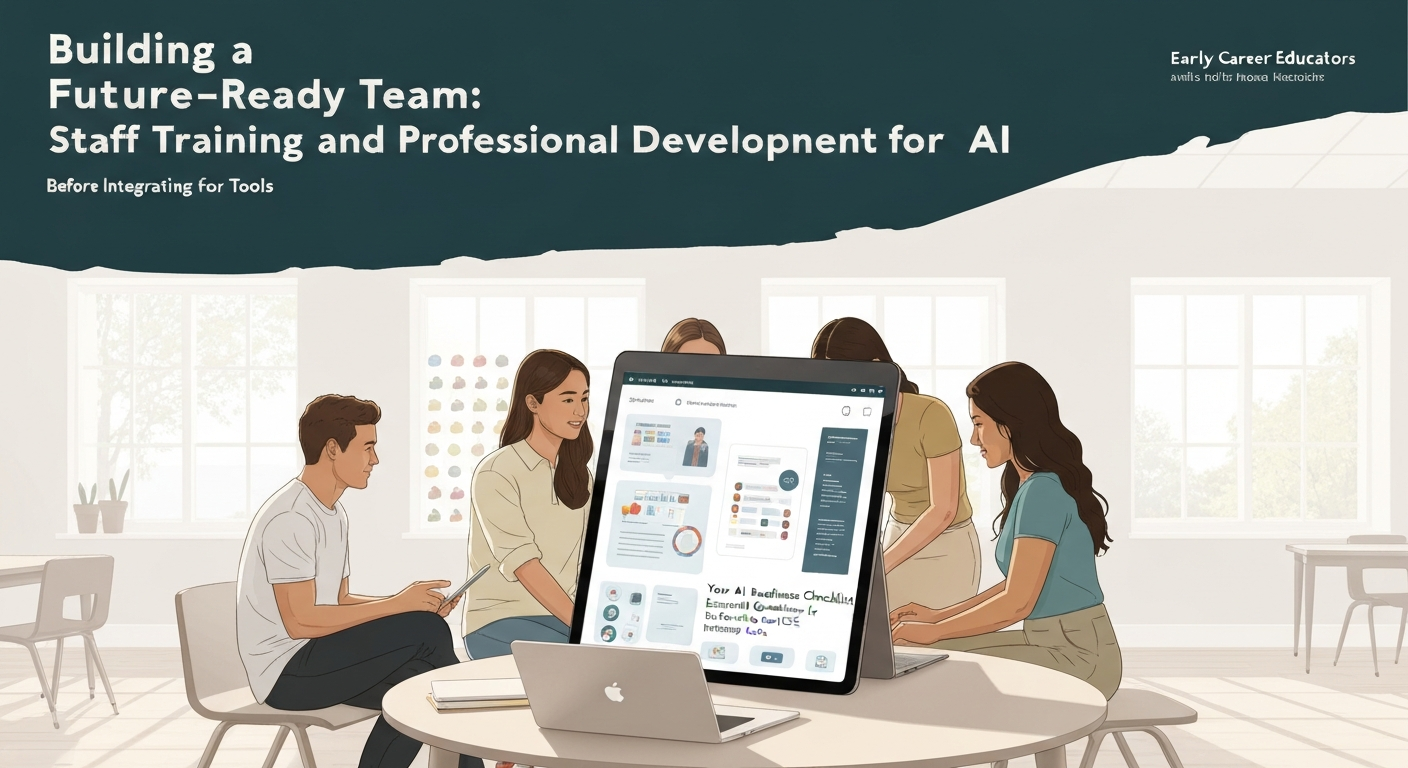
Integrating AI tools into early childhood education programs often reveals an unexpected truth: the technology itself is rarely the hardest part. The real challenge lies in preparing the people who will use it daily. About 45% of early educators globally report feeling unprepared for new technologies, highlighting a critical need for focused staff development.
Staff AI Readiness: Quick Reference
Before any AI tool arrives, assess your team's current digital literacy and comfort. A simple anonymous survey can reveal that a senior ECE in Vancouver may feel very differently about using a new observation app than a recent graduate in rural Alberta.
Identify specific AI tools, like YochienAI for AI-assisted observation, and provide hands-on training. Focus on practical application and ethical considerations, not just features. Sessions could cover what LLMs are and how they assist, rather than replace, human judgment.
Proactive communication mitigates resistance. Frame AI as a support tool, not a replacement. For instance, explain how AI can automate routine tasks, freeing up educators in a Toronto daycare to spend more quality time with children.
AI evolves rapidly. Establish a culture where ongoing learning is expected and supported. This might involve monthly "tech-check" meetings or access to online courses, ensuring educators in Montreal stay current with new capabilities and best practices.
Regularly solicit feedback from educators on their experience with AI tools. This ensures practical issues are addressed and helps refine training, making the integration process truly collaborative for your team.
A successful AI integration hinges on educators feeling empowered, not overwhelmed. Your AI Readiness Checklist: Essential Questions for Canadian ECE
Engaging Your Community: Parent and Stakeholder Readiness for AI Integration
Successfully introducing new AI tools into a Canadian ECE program hinges less on the technology itself and more on the community embracing it. An overlooked but critical first step is transparent, proactive engagement with parents and other stakeholders, addressing their concerns before any tools like AI-assisted observation platforms are even deployed.
Community Engagement Readiness Checklist
What is your clear communication plan to inform parents about new AI tools, explaining their purpose and benefits? Consider directing them to resources like YochienAI's parent information page.
How will you proactively address common parent concerns regarding data privacy, screen time, and the specific role of AI in their child's developmental journey?
What explicit, easy-to-understand consent processes will be established for parents regarding their child's interaction with AI tools and any associated data collection?
How will your program clearly demonstrate the tangible benefits of AI to parents, highlighting how it enhances learning insights, strengthens observation practices, or improves parent-educator communication?
What formal and informal opportunities exist for parents and community members to provide feedback or ask questions about the program's AI integration?
A senior kindergarten teacher in Halifax, for instance, might use AI to streamline observation notes, but without clear parent understanding, this could be misconstrued as reduced human interaction. A 2023 study by the Canadian Centre for Child Protection found that roughly 60% of Canadian parents express privacy concerns regarding educational technology. Addressing these concerns directly and demonstrating how AI tools, like those for administrative tasks, can free up educators for more direct child engagement, is crucial for building trust and ensuring your program truly benefits from its AI readiness efforts.
Your Comprehensive AI Readiness Scorecard: Next Steps and Action Plan
Consolidating your self-assessment responses into a comprehensive AI Readiness Scorecard transforms abstract questions into actionable insights. This tool helps Canadian ECEs move beyond general interest to pinpoint exact strengths and weaknesses before integrating any new AI solutions, like an AI-assisted observation platform.
| Readiness Domain | Current Status (Self-Assessment) | Action Plan & Timeline |
|---|---|---|
| Digital Infrastructure | Example: "Reliable Wi-Fi in 3/5 classrooms; devices are 5+ years old." | Upgrade classroom Wi-Fi (Q3 budget); research tablet procurement for 2025. |
| Data Privacy & Ethics | Example: "Aware of Canada's Digital Charter, but no formal ECE-specific policy." | Draft ECE-specific privacy policy by Q4, reviewed by legal counsel. |
| Staff Training | Example: "45% of educators feel unprepared for new tech (industry average)." | Pilot AI literacy workshop for 3 senior educators (November); expand to all staff Q1 2025. |
| Community Engagement | Example: "Parents generally trust the centre, but haven't discussed AI specifics." | Develop parent-facing FAQ on AI tools (December); host info session Q1 2025. |
Reviewing your responses to Your AI Readiness Checklist: Essential Questions for Canadian ECEs Before Integrating New Tools allows you to assign a clear readiness level to each domain. This structured approach helps identify your strongest areas, such as a robust digital infrastructure in a specific daycare in Vancouver, while simultaneously highlighting critical gaps like a lack of formal data governance policies, enabling a phased, budget-conscious implementation.
Conclusion: Empowering Your Canadian ECE Program for the AI Era
Empowering Your Canadian ECE Program for the AI Era
The true promise of artificial intelligence in early childhood education unfolds not with the purchase of a new app, but through deliberate, comprehensive readiness. While the global AI in education market projects over 20% annual growth between 2023-2028, Canadian ECEs face unique considerations. Proactive preparation, encompassing everything from robust digital infrastructure to staff training and parent engagement, forms the cornerstone of ethical, effective, and compliant technology integration. A prepared program, like a well-organized classroom, is better equipped to select appropriate tools, such as AI-assisted observation platforms, and maximize their benefits for children and educators alike. This self-assessment, "Your AI Readiness Checklist: Essential Questions for Canadian ECEs Before Integrating New Tools," should be an ongoing process, not a one-time task. For instance, as new provincial guidelines emerge or as tools like YochienAI introduce new features, your program's readiness might shift. Roughly 45% of Canadian early educators report feeling overwhelmed by technological changes; a continuous readiness mindset builds confidence and competence across the team. Begin your self-assessment today to identify gaps and strengths. This initial step towards a future-ready ECE program ensures you're not merely adopting technology, but thoughtfully integrating it to enhance learning, streamline administration, and foster a confident, well-supported team. For further support and tailored guidance, consider reaching out to experts via https://www.yochienai.ca/contact.Frequently Asked Questions
Why do Canadian ECE programs need an AI readiness checklist?
Canadian ECE programs need an AI readiness checklist to navigate the opportunities and challenges of new technologies responsibly. It ensures that any AI integration aligns with pedagogical goals, protects child privacy, and supports equitable access. Without a structured approach, programs risk adopting tools that may not be developmentally appropriate or compliant with local regulations, potentially undermining trust and educational quality. This proactive assessment helps safeguard children's best interests and maintain high standards of care.
How can Canadian ECEs ensure data privacy with new AI tools?
Ensuring data privacy requires ECEs to thoroughly vet AI tools for their data collection, storage, and usage policies. Programs must obtain explicit consent from parents for any data involving children, ensuring anonymization where possible. Compliance with Canada's PIPEDA and provincial privacy acts, like Alberta's PIPA or Quebec's Act respecting the protection of personal information in the private sector, is crucial. Prioritizing tools with robust encryption and clear data retention policies helps mitigate risks and build trust within the community.
What Canadian regulations affect AI use in early childhood education?
Several Canadian regulations impact AI use in ECE. The Personal Information Protection and Electronic Documents Act (PIPEDA) governs private sector data handling federally. Provincially, acts like Ontario's FIPPA or British Columbia's PIPA apply to public institutions and some private entities. Additionally, provincial ECE licensing bodies set standards for program operations, which implicitly cover technology use. While no specific AI-in-ECE legislation exists yet, the proposed federal Artificial Intelligence and Data Act (AIDA) could introduce new compliance requirements for high-impact AI systems.
Is staff training essential for integrating AI in ECE centers?
Staff training is absolutely essential for successful AI integration in ECE centers. Educators need practical instruction on how to operate specific AI tools, understand their pedagogical applications, and recognize their limitations. Training should also cover ethical considerations, data privacy protocols, and how to explain AI's role to parents. Without proper support, staff may feel overwhelmed or misuse tools, hindering potential benefits and potentially compromising child safety or data security. Ongoing professional development ensures confident and effective implementation.
Can ECE programs get funding to implement AI technology?
ECE programs may find limited but growing funding opportunities for AI technology implementation. Provincial and federal government grants, often focused on educational innovation, digital literacy, or accessibility, can be pursued. Organizations like the McConnell Foundation or local community grants might also support technology initiatives. Partnerships with local universities or tech companies could offer pilot program funding or in-kind support. Programs should align their AI proposals with broader educational goals and demonstrate clear benefits to children and staff to increase their chances of securing financial assistance.
Frequently Asked Questions
Why do Canadian ECE programs need an AI readiness checklist?
How can Canadian ECEs ensure data privacy with new AI tools?
What Canadian regulations affect AI use in early childhood education?
Is staff training essential for integrating AI in ECE centers?
Can ECE programs get funding to implement AI technology?
Keep reading
All articles →
Smart Choices for Canadian ECE: Evaluate AI Tools Critically
Making Smart Choices for Canadian ECE: How to Evaluate AI Tools with Critical Thinking often means looking past the marketing hype to understand what AI actually does. The true value in early learning isn't just adopting new tools, but discerning their alignment with play-based learning and holistic development.

Designing for Little Hands and Big Hearts: Human-Centred AI in Canadian ECE
Human-Centred AI (HCAI) in Canadian early childhood education (ECE) isn't about complexity; it's about intentional simplicity. It aims to augment educator observation skills and deepen parent engagement, ensuring technology serves children's developmental needs.

Before You Click: 8 Essential Questions Canadian ECEs Should Ask About New AI Tools
Canadian ECEs face an overwhelming influx of new AI tools, many ill-suited for young children's unique developmental needs. This demands a structured approach to prevent pedagogical missteps and privacy breaches as the AI in education market skyrockets.