
Before You Adopt AI: Essential Questions Canadian Educators Must Ask
The true challenge for Canadian educators isn't just adopting AI, but ensuring its integration aligns with human-centred pedagogical values and privacy laws. Many programs face pressure to explore AI without a clear framework, leading to confusion.

Beyond the Hype: Why Thoughtful AI Integration Matters for Canadian Educators
Beyond the Hype: Why Thoughtful AI Integration Matters for Canadian Educators
While the allure of artificial intelligence (AI) in education often focuses on efficiency gains, the true challenge for Canadian educators isn't merely adopting AI, but ensuring its integration aligns profoundly with our human-centred pedagogical values and robust privacy laws. Many K-12 and early childhood education (ECE) programs in provinces like Alberta and Ontario face pressure to explore AI tools without a clear, Canadian-specific framework for evaluation, often leading to confusion over which questions to ask before you adopt AI.
The rapid pace of AI development, encompassing tools like large language models (LLMs) that generate text and AI-driven analytics platforms, can feel overwhelming. Educators frequently express concern about unintended consequences: a 2023 survey by the Canadian Teachers' Federation, for instance, highlighted data privacy and algorithmic bias as top worries. Without a structured approach, districts risk adopting tools that might not align with provincial curricula or, worse, compromise student well-being through unvetted data practices. A senior kindergarten teacher in Halifax, for example, needs to know if an AI-powered observation tool meets Nova Scotia's privacy standards, not just its marketing claims.
"We need to move past the 'shiny new toy' phase and ask hard questions about what AI truly adds to a child's learning journey, especially in our Canadian context." — kindergarten administrator, Toronto
To address this, a "Pre-Adoption AI Readiness Scorecard for Canadian Educators" offers a vital decision-making framework. This scorecard helps identify weak points in a potential AI tool's profile, providing actionable steps to mitigate risks before integration. It moves beyond generic global advice, focusing instead on the unique regulatory landscape and educational priorities within Canada, ensuring that any AI adoption genuinely enhances learning while upholding our commitment to equitable, secure, and human-centred education.
Question 1: Pedagogical Alignment & Learning Outcomes (Does it serve our educational goals?)
Pedagogical Alignment & Learning Outcomes
Adopting AI for its novelty, rather than its proven educational benefit, risks integrating tools that complicate teaching without truly enhancing learning. The core question for any Canadian educator evaluating artificial intelligence (AI) tools, which are algorithms that perform tasks typically requiring human intelligence, must be: Does this technology genuinely serve our pedagogical goals and improve student outcomes, or simply automate existing processes? For instance, a senior kindergarten teacher in Halifax considering an AI-powered literacy app needs to confirm it aligns directly with Nova Scotia's Early Learning Curriculum framework, specifically targeting emergent literacy competencies, not just offering a digital worksheet. Educators must scrutinize how an AI tool fosters higher-order thinking. Does it encourage critical analysis and creative problem-solving, or merely provide efficient content delivery? A recent report from the Council of Ministers of Education, Canada (CMEC) highlighted that while AI can personalize learning, its true value lies in freeing up educator time for more meaningful student interaction, not just administrative shortcuts. For example, an AI tool like YochienAI, designed for early childhood education, aims to streamline observation and reporting, allowing educators in Ontario daycares to spend more time directly engaging with children, rather than manually documenting every milestone."We don't need AI to just make things faster. We need it to make learning better, to help every child feel seen and understood in a way that truly matters." — Early Childhood Educator, Vancouver IslandBefore you adopt AI: essential questions Canadian educators must ask for thoughtful integration. The pedagogical rationale forms the bedrock of responsible AI adoption. Moving beyond this initial assessment of learning outcomes, the next critical step involves a deep dive into the ethical implications and potential biases embedded within these powerful new tools.
Question 2: Ethical Considerations & Bias Mitigation (Is it fair, equitable, and transparent?)
Ethical Considerations & Bias Mitigation: Is it fair, equitable, and transparent?
The most significant irony of AI in education is that tools designed for personalization can inadvertently amplify existing inequities if not rigorously vetted for bias. Before you adopt AI: Essential Questions Canadian Educators Must Ask for Thoughtful Integration must include a deep dive into fairness.Proactive Ethical Vetting
- Transparency in AI Decisions: Developers can detail how their AI, such as YochienAI's observation insights, generates recommendations, allowing educators to understand the underlying logic rather than accepting black-box outputs.
- Mitigating Algorithmic Bias: Companies committed to ethical AI actively test their models against diverse Canadian student data, including those from Indigenous communities or students with learning disabilities, to identify and correct biases.
- Equitable Access Focus: Tools designed with offline capabilities or low-bandwidth modes ensure students in remote Northern communities or those with limited home internet access can still benefit.
- Supporting Autonomy: Ethically designed AI provides suggestions or resources without dictating learning paths, allowing a Grade 7 student in Vancouver to still choose their project topic, fostering critical thinking.
- Community Engagement: Proactive communication with parent councils in places like Surrey, BC, about an AI tool's purpose and safeguards builds trust and addresses concerns early.
Potential Ethical Pitfalls
- Unidentified Algorithmic Bias: If an AI is trained predominantly on data from one demographic, it might misinterpret or disadvantage students from other backgrounds, like a speech-to-text tool struggling with diverse Canadian accents.
- Opaque Decision-Making: Without knowing *why* an AI suggests a particular intervention for a student in Calgary, educators cannot critically evaluate its appropriateness or address parental questions effectively.
- Exacerbating Digital Divide: Requiring constant high-speed internet or expensive devices for AI tools can exclude students from lower-income families or rural areas in provinces like Saskatchewan.
- Undermining Critical Thinking: Over-reliance on AI-generated answers or content could reduce opportunities for students to engage in independent problem-solving or creative thought.
- Lack of Stakeholder Involvement: Introducing AI without transparent discussions with parents and students can lead to distrust, privacy concerns, and resistance within the school community.
"My biggest fear is bringing in a tool that works great for some kids, but completely misses the mark, or worse, misjudges, our students with unique learning needs or cultural backgrounds." — elementary school principal, SaskatoonUltimately, the goal is for AI to uplift all learners, not just those fitting a narrow profile. Thoroughly vetting an AI's ethical framework and bias mitigation strategies ensures it genuinely supports Canada's diverse educational landscape.
Question 3: Data Privacy, Security & Compliance (Are student data protected under Canadian law?)

Data Privacy, Security & Compliance: Are student data protected under Canadian law?
The biggest hurdle to AI adoption in Canadian education isn't pedagogical innovation, but rather the stark reality of provincial and federal privacy legislation. Many AI tools are built without Canadian privacy frameworks like PIPEDA (Personal Information Protection and Electronic Documents Act) in mind, creating significant compliance risks for schools and early learning centres. Before you adopt AI, Canadian educators must ask critical questions about data privacy, security, and compliance to ensure student information remains protected.
Evaluating an AI tool's data handling practices requires a close look at several key areas:
| Privacy & Security Question | Why it Matters for Canadian Educators | Actionable Step Before Adoption |
|---|---|---|
| What data types does the AI collect? | Ensures collection is limited to only what's necessary for the stated pedagogical purpose (e.g., student names for progress tracking, not browsing history). | Review the AI provider's data inventory. Ask for specifics on how data is minimized. |
| Where is student data stored? | Critical for compliance with provincial data residency requirements (e.g., some provinces mandate data stay in Canada). Cloud providers' locations are key. | Confirm server locations. Prioritize providers with Canadian hosting, like YochienAI. |
| What are the data retention policies? | Ensures data isn't kept indefinitely, reducing risk. Policies should align with provincial school board guidelines. | Demand clear timelines for data deletion after a student leaves the program or school. |
| What security protocols are in place? | Protects against breaches. Look for robust encryption, multi-factor authentication, and regular third-party security audits. | Request details on encryption standards and access controls. See YochienAI's security approach as an example. |
| Is there a clear, accessible privacy policy? | Transparency with parents and guardians is legally and ethically vital. The policy must clearly outline data use, storage, and rights. | Evaluate the policy's readability and alignment with Canadian privacy laws. Share it with your school's legal counsel. |
| How does the tool handle data anonymization? | De-identifying data where possible reduces privacy risks, especially for research or aggregated reporting. | Inquire about the technical methods used for anonymization and de-identification. |
A recent survey of Canadian educators indicated that approximately 70% rank student data privacy as their top concern when considering new educational technologies, highlighting the urgent need for clear answers to these questions.
"We can't just trust
Question 4: Practicality, Support & Professional Development (Can we actually implement and sustain it?)
The allure of AI often overshadows the nuts-and-bolts reality of its everyday use in a classroom or daycare. Before you adopt AI, essential questions Canadian educators must ask for thoughtful integration must extend beyond pedagogy to the practicalities of implementation and long-term sustainability.
Infrastructure & Device Compatibility
Does our existing technical infrastructure support this AI tool? For instance, a tool like YochienAI, designed for early childhood observation, requires stable Wi-Fi and compatible tablets or smartphones. Many Canadian school districts, particularly in rural Saskatchewan or Northern Ontario, face varying broadband access and device availability, which directly impacts the feasibility of AI integration.
Ongoing Professional Development
Initial training is a start, but sustained professional learning is crucial. A recent survey by the Council of Ministers of Education, Canada (CMEC) highlighted that educators prioritize ongoing support over one-off workshops. Consider how a junior kindergarten teacher in Vancouver will receive continued coaching on using generative AI for lesson planning, or how a special education assistant in Quebec will master AI-powered assistive technologies over several years.
Vendor Support & User Experience
What technical support does the vendor provide? Prompt troubleshooting is vital when an AI writing assistant malfunctions during a Grade 7 English class in Calgary. Beyond support, the interface must be intuitive. If an AI tool requires a steep learning curve for a busy Grade 2 teacher in Halifax, its adoption will falter, regardless of its promised benefits.
Resource Sharing & Collaboration
Creating a community of practice helps educators share insights. Will there be platforms or dedicated time for a senior kindergarten team in Toronto to discuss effective strategies for using AI to document play-based learning, or for a high school math department in Montreal to share AI-generated problem sets? This collaborative element is often overlooked but critical for successful, widespread adoption.
These practical considerations form the bedrock of successful AI integration. Without a clear plan for infrastructure, ongoing learning, and robust support, even the most innovative AI solution risks becoming another underutilized tool in Canadian classrooms.
Question 5: Human-Centred Design & Educator Empowerment (Does it enhance, not replace, human connection?)

Question 5: Human-Centred Design & Educator Empowerment (Does it enhance, not replace, human connection?)
Thoughtful AI integration in Canadian classrooms hinges on a crucial paradox: the most effective AI tools often make themselves invisible, quietly augmenting human capabilities rather than drawing attention away from direct interaction. The real value isn't AI doing the teaching, but AI freeing up a senior kindergarten teacher in Halifax to spend an extra 10 minutes observing a child's block play, or allowing a Grade 4 educator in Saskatoon to craft a personalized feedback message that truly resonates. This perspective is vital when considering "Before You Adopt AI: Essential Questions Canadian Educators Must Ask for Thoughtful Integration." The goal is to ensure AI serves as an assistant, not a replacement. For instance, an AI tool like YochienAI helps early childhood educators document observations and generate reports, thereby reducing administrative burden. This efficiency allows educators to dedicate more time to direct engagement with children, fostering deeper relationships and more responsive teaching. Industry reports indicate that administrative tasks consume roughly 20-30% of a typical educator's day; reducing this through smart automation directly translates to more time for pedagogy and connection."We don't want AI to take over the classroom; we want it to give our teachers back their time. If a tool doesn't empower my staff to be more present with students, it's not the right fit." — kindergarten administrator, TorontoEvaluating AI through this human-centred lens ensures that any adopted technology genuinely enriches the educational environment and strengthens the essential connections between students and their teachers, preparing the ground for sustainable, scalable integration.
Question 6: Long-Term Vision & Scalability (Is this a sustainable choice for the future?)
Long-Term Vision & Scalability: Is this a sustainable choice for the future?
Many AI tools, initially exciting, quickly become obsolete or expensive. A critical part of Before You Adopt AI: Essential Questions Canadian Educators Must Ask for Thoughtful Integration involves projecting an AI solution's viability beyond its pilot phase. The global AI in education market is projected to reach $25.7 billion by 2030, according to industry reports, which means new tools and shifting pricing models are constant. Educators in places like the Hamilton-Wentworth District School Board need to ask if a tool will adapt to their evolving needs, not just solve an immediate problem.
Consider the provider's product roadmap. Does the company openly share its plans for future development, updates, and compatibility with evolving educational standards, like revisions to Ontario's curriculum activities? A tool designed for the 2024 curriculum might miss key elements of a 2028 update without a clear upgrade path. Long-term cost implications extend beyond initial licensing; factor in potential upgrades, maintenance, and per-user fees as student numbers increase. A pilot program for 20 students in a single Vancouver classroom looks very different when scaled to 5,000 students across a provincial district.
"We learned the hard way that a 'free trial' AI tool became prohibitively expensive once we tried to roll it out beyond one classroom. Always ask about the five-year cost projection." — Elementary School Principal, Calgary
Furthermore, assess the AI tool's adaptability to pedagogical shifts or new research findings in educational psychology. If a tool like an AI-powered tutoring system relies heavily on one learning theory, how easily can it adjust if new evidence points to a different approach? Finally, understand the process for data migration or discontinuation of service. If a school or daycare, such as one using YochienAI, decides to switch providers, what guarantees are in place for the secure transfer or deletion of student data, ensuring compliance with provincial privacy laws?
Making Your Decision: A Canadian Educator's AI Readiness Checklist
Making Your Decision: A Canadian Educator's AI Readiness Checklist
While the allure of AI-assisted observation tools like YochienAI is clear, the real challenge for Canadian educators isn't just knowing what questions to ask, but how to weigh the answers. Many schools, particularly in provinces like British Columbia and Ontario, are grappling with the rapid influx of new educational technologies. A structured decision-making framework is crucial to avoid impulsive adoption and ensure thoughtful integration. This isn't about rigid gatekeeping; it's about making informed choices that align with our pedagogical values and regulatory landscape.
To effectively evaluate potential tools before you adopt AI, essential questions Canadian educators must ask for thoughtful integration can be formalized into a readiness scorecard. Assign a weighted score to each question category—pedagogical alignment, ethical considerations, data privacy, practicality, human-centred design, and long-term vision—based on your school's specific priorities. For instance, a daycare in Quebec might heavily weight privacy compliance under the Act respecting the protection of personal information in the private sector, while a high school in Alberta might prioritize pedagogical alignment with the provincial curriculum. Score each potential AI tool against these questions, creating a quantitative measure of its suitability. Low scores pinpoint specific weaknesses, prompting actionable steps such as requesting additional privacy assurances from vendors or planning targeted professional development for staff in Calgary.
"We can't just buy the shiny new thing. We need a clear process to ensure any AI we bring in genuinely helps our students and teachers, not just adds another layer of complexity or risk." — Kindergarten administrator, Toronto
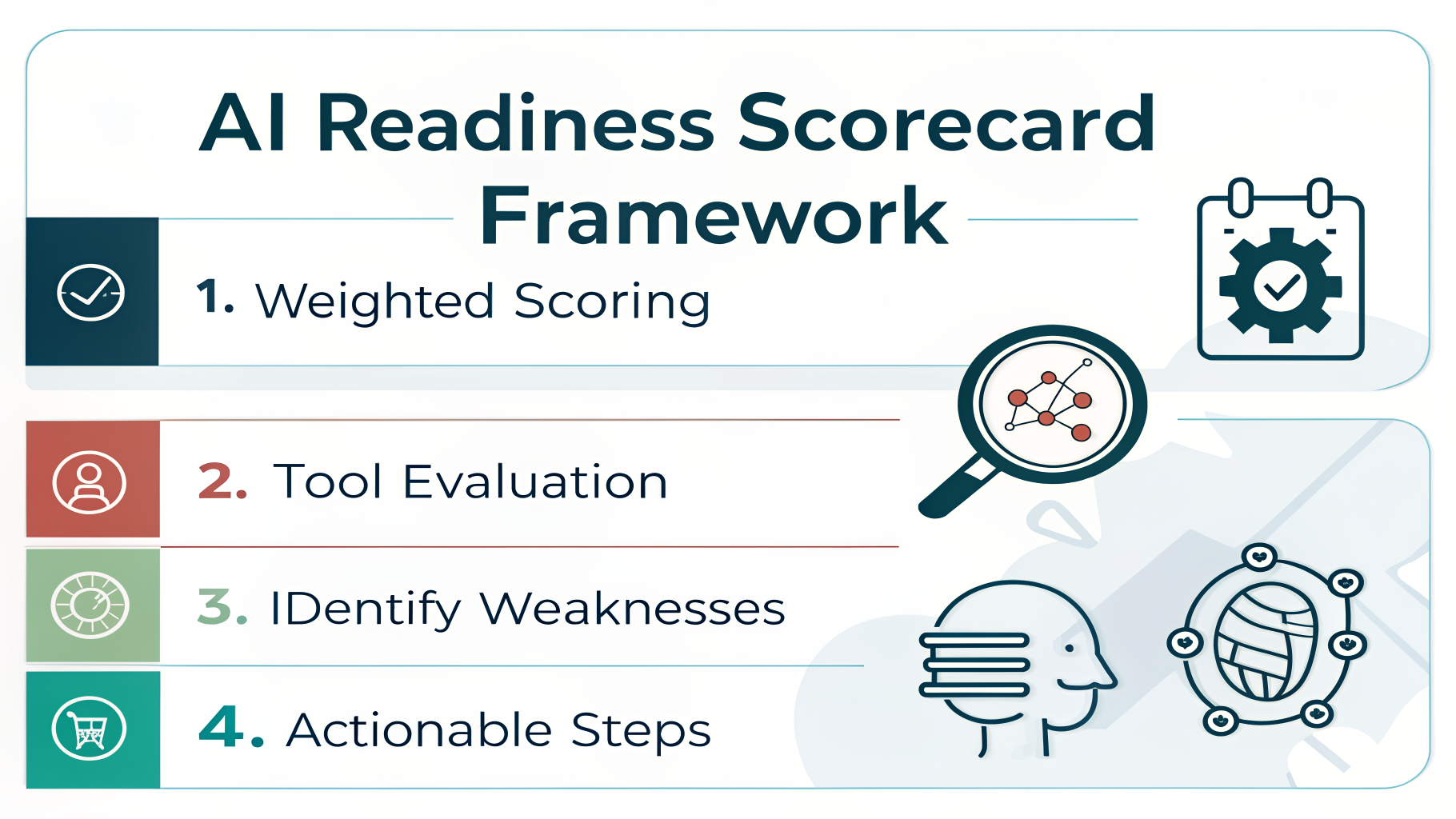
This systematic approach fosters a culture of continuous evaluation, recognizing that AI integration is not a one-time event. Educational institutions must regularly review and adapt their AI strategies to ensure they consistently meet Canadian educational goals, uphold student well-being, and comply with evolving privacy regulations like those from the Office of the Privacy Commissioner of Canada.
Frequently Asked Questions About Thoughtful AI Integration in Canadian Education
Canadian educators often feel overwhelmed by the rapid pace of AI development, struggling to separate hype from genuine pedagogical value. The real challenge isn't just adopting AI, but doing so thoughtfully, ensuring it aligns with our unique educational values and regulatory landscape.
Quick Reference: Navigating AI Adoption in Canadian Education
Begin with a small pilot project in one or two classrooms, focusing on a specific, well-defined problem like automating report card comments or generating differentiated practice questions. Engage a core team of educators and IT staff. For instance, a school in Calgary might trial an AI-powered writing feedback tool with Grade 7 English classes.
Start by reviewing existing Canadian guidelines, such as the Office of the Privacy Commissioner of Canada's guidance on AI, or the UNESCO Recommendations on the Ethics of AI. Adapt these principles to your school’s context, creating a simple checklist for teachers to evaluate tools. Questions should cover bias, transparency, and human oversight, as detailed in our comprehensive "Before You Adopt AI: Essential Questions Canadian Educators Must Ask for Thoughtful Integration" article.
Provincial Ministries of Education are developing resources; for example, Ontario's Ministry of Education has released guidance on digital learning. Look for reports from organizations like the Council of Ministers of Education, Canada (CMEC) or university research centres. Tools like YochienAI, built in Ontario, offer specific privacy and pedagogical alignments for early childhood education.
The biggest risks include data privacy breaches, algorithmic bias leading to inequitable outcomes, and over-reliance that diminishes critical thinking. Mitigate by choosing vendors with robust Canadian data residency and encryption (like YochienAI), regularly auditing AI outputs for fairness, and emphasizing AI as a support tool, not a replacement for human judgment. Screen time for younger students using AI tools must also be carefully managed, adhering to Canadian Paediatric Society guidelines.
Host information sessions and create clear communication materials explaining the purpose, benefits, and safeguards of AI tools. For example, a parent council meeting in Vancouver could feature a demonstration of how an AI tool helps personalize math practice, along with a Q&A on data handling. Ensure consent forms clearly outline data usage and privacy protocols.
Frequently Asked Questions
Why is thoughtful AI integration crucial for Canadian educators?
How do Canadian schools protect student data when using AI?
Is AI fair and equitable for all students in Canadian classrooms?
What support do Canadian teachers need to implement AI effectively?
Can AI enhance student learning without replacing human connection in Canadian education?
Keep reading
All articles →
Smart Choices for Canadian ECE: Evaluate AI Tools Critically
Making Smart Choices for Canadian ECE: How to Evaluate AI Tools with Critical Thinking often means looking past the marketing hype to understand what AI actually does. The true value in early learning isn't just adopting new tools, but discerning their alignment with play-based learning and holistic development.

Designing for Little Hands and Big Hearts: Human-Centred AI in Canadian ECE
Human-Centred AI (HCAI) in Canadian early childhood education (ECE) isn't about complexity; it's about intentional simplicity. It aims to augment educator observation skills and deepen parent engagement, ensuring technology serves children's developmental needs.

Before You Click: 8 Essential Questions Canadian ECEs Should Ask About New AI Tools
Canadian ECEs face an overwhelming influx of new AI tools, many ill-suited for young children's unique developmental needs. This demands a structured approach to prevent pedagogical missteps and privacy breaches as the AI in education market skyrockets.