
Beyond the Hype: Human-Centred AI for Canadian ECEs – An Educator's Playbook
Human-centred AI for Canadian ECEs rejects automation, prioritizing augmenting human capabilities and preserving essential human connection. This approach enhances the educator's unique role and the child's developmental experience.

Deconstructing the Buzzword: What 'Human-Centred AI' Truly Means for Canadian ECEs
Deconstructing the Buzzword: What 'Human-Centred AI' Truly Means for Canadian ECEs
While AI often conjures images of automation and efficiency, the truly non-obvious aspect of human-centred AI for Canadian Early Childhood Educators is its deliberate rejection of these as primary goals. Instead, it prioritizes augmenting human capabilities and preserving essential human connection, directly answering the question: Beyond the Hype: What 'Human-Centred AI' Means for Canadian Early Childhood Educators and Why It Matters. This approach means AI tools are designed to enhance, not diminish, the unique role of the educator and the child's developmental experience, particularly critical during the 0-6 years for brain development.
For a senior kindergarten teacher in Halifax, this translates to an AI tool that might analyze anonymized play observations to highlight emerging social patterns, rather than automating progress reports. It's about AI supporting deeper insight, not replacing the teacher's judgment. True human-centred AI in Canadian ECE settings explicitly aims to support relationship-based learning, recognizing that early childhood is a critical period for social, emotional, and cognitive development that thrives on human interaction. It stands apart from general AI by its foundational design principle: to serve human well-being, needs, and values above all else.
This focus aligns with Canada's broader commitment to responsible technology. The Pan-Canadian Artificial Intelligence Strategy, first launched in 2017 and renewed in 2021, underscores a national dedication to developing and adopting AI in ways that benefit society and uphold ethical considerations. For Canadian ECEs, this means evaluating AI tools not just on their features, but on how well they integrate with established pedagogical practices, respect child privacy, and support educators. YochienAI aim to do by focusing on observation assistance rather than direct child interaction. The goal is to elevate the educator's capacity, not just streamline administrative tasks, ensuring technology remains a thoughtful assistant in the complex, human-driven work of early learning.
Why It Matters: The Potential of Human-Centred AI in Early Learning
Why It Matters: The Potential of Human-Centred AI in Early Learning
The deepest irony of AI in early childhood education (ECE) is that its greatest value lies not in replacing human interaction, but in amplifying it. Human-centred artificial intelligence (AI), defined as AI systems designed to support and enhance human capabilities rather than automate them away, directly addresses the persistent ECE challenge of balancing administrative load with meaningful child engagement. This approach is not about machines teaching children; it's about giving educators sharper tools to deepen their relationships with children and families, which is the bedrock of Canadian ECE pedagogy.
Consider a senior kindergarten teacher in Surrey, BC. Instead of spending an hour after dismissal compiling observation notes by hand, a tool like YochienAI can process multimedia observations, flag developmental milestones, and draft initial parent communication. This frees up crucial time for that teacher to engage in a deeper conversation with a parent about their child's unique strengths, or to plan a more individualized learning activity for a child struggling with fine motor skills. This shift directly answers the question of why is human-centred AI important for child development: it helps educators be more present and responsive.
The potential for human-centred AI to transform ECE is significant, especially given that a 2023 survey indicated a substantial percentage of educators feel unprepared for AI integration. This isn't about adding another burden; it's about providing supportive tools. Human-centred AI can offer personalized insights into child development by analyzing patterns in observations, helping educators tailor learning experiences and identify support needs more effectively. For instance, an AI might highlight that "Liam consistently avoids group activities involving loud noises," prompting an educator to investigate sensory sensitivities rather than just labeling him "shy."
This approach directly addresses how human-centred AI benefits early childhood educators. It augments their professional judgment, offering data-driven perspectives without dictating pedagogical choices. By streamlining routine tasks, educators gain capacity for the creative, responsive, and deeply human work that no algorithm can replicate. This also helps demystify the larger question of Beyond the Hype: What 'Human-Centred AI' Means for Canadian Early Childhood Educators and Why It Matters. It means more focused human connection, not less.
Core Principles: Guiding Human-Centred AI in Canadian Early Childhood Settings
Core Principles: Guiding Human-Centred AI in Canadian Early Childhood Settings
The true value of artificial intelligence in early childhood education emerges only when it aligns strictly with the foundational principles of child development and Canadian pedagogical values. This commitment goes beyond merely using technology; it demands that AI tools are designed and implemented with children and educators at their absolute centre. Without this deliberate focus, AI risks becoming a distraction or, worse, a detriment, especially during the critical 0-6 years for brain development. Human-centred AI in Canadian ECE settings adheres to five core principles. First, **Child-First Design** dictates that any AI tool must prioritize a child's developmental needs, safety, and well-being. This means considering screen time, cognitive load, and the potential impact on social-emotional learning before any other feature. A tool like YochienAI, for instance, focuses on assisting educators with observation, minimizing direct child interaction with the AI itself. Second, **Educator Involvement** ensures AI supports professional judgment, rather than replacing it. A senior kindergarten teacher in Halifax, for example, might use an AI tool to quickly synthesize observation notes, freeing up time for direct, meaningful interactions with children, rather than relying on the AI for pedagogical decisions. Third, **Transparency and Explainability** are non-negotiable. ECEs must understand how an AI tool arrives at its suggestions, what data it processes, and its limitations. This builds trust and enables informed decisions. Fourth, **Ethical and Equitable** design demands AI tools are fair, inclusive, and free from bias, especially critical in Canada's diverse cultural and linguistic landscape. Algorithms must not inadvertently disadvantage specific groups. Finally, **Privacy and Security** are paramount. Robust measures must protect sensitive child and family data, aligning with Canadian privacy expectations. YochienAI's privacy policy and security protocols offer a clear example of this commitment.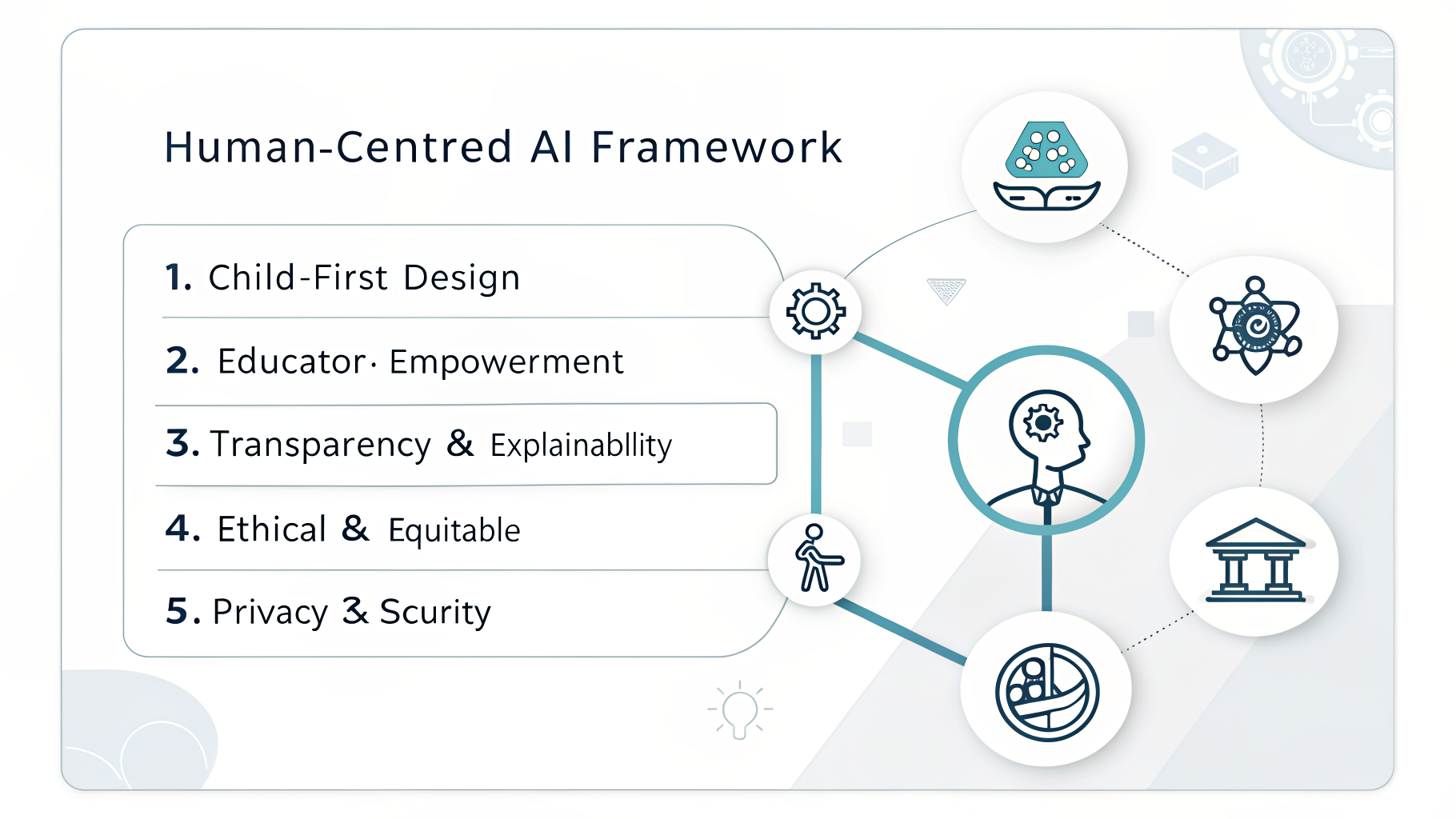
The Educator's Lens: How to Identify and Evaluate Human-Centred AI Tools
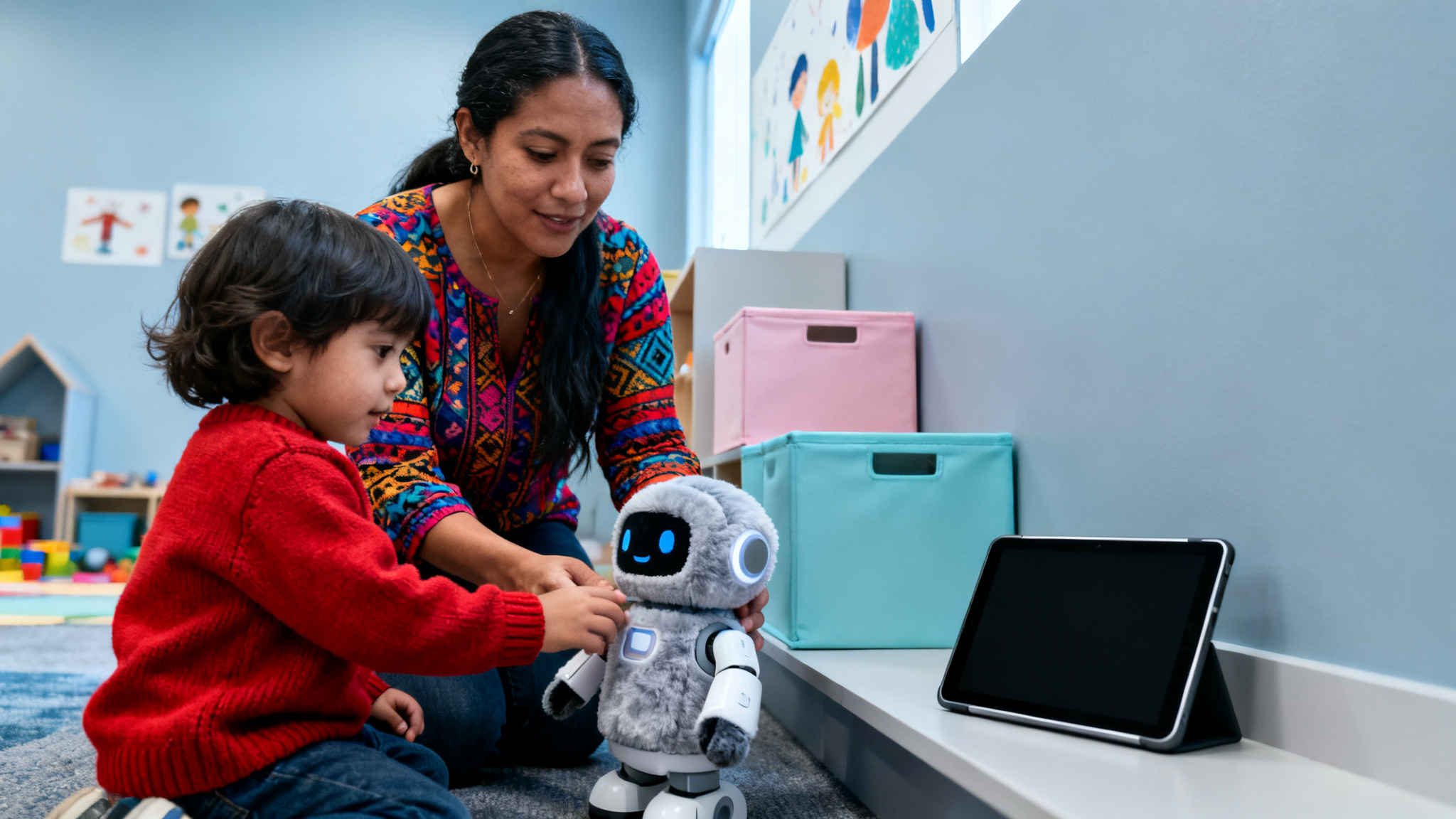
The Educator's Lens: Identifying and Evaluating Human-Centred AI Tools
The real challenge with AI in early childhood education isn't finding tools, but discerning which ones genuinely support children and educators rather than merely automating tasks. Many vendors claim their AI is "human-centred," yet a critical look reveals that some prioritize efficiency over the nuanced developmental needs of a three-year-old in a Vancouver daycare. Educators need a clear framework to cut through this marketing noise and identify tools that truly align with Canadian early learning values, moving beyond the hype to understand what 'human-centred AI' means for Canadian Early Childhood Educators.
When evaluating AI tools for your program, look for clear indicators. A senior kindergarten teacher considering a new observation tool, for instance, should ask if it augments their ability to understand a child's unique learning journey, or if it simply generates generic reports. Here's a practical guide:
| Feature/Aspect | Red Flag (Avoid) | Green Light (Seek Out) |
|---|---|---|
| Transparency | Opaque algorithms; "black box" decisions; no explanation for AI outputs. | Clear explanation of how AI works; data sources disclosed; human oversight built-in. |
| Data Privacy | Data monetization; vague privacy policies; data stored outside Canada. | Clear, robust privacy policies (e.g., YochienAI's Privacy); data encryption; compliance with provincial regulations. |
| Educator Role | Automates core teaching tasks; reduces need for human observation or interaction. | Augments educator capacity; frees up time for direct child engagement; supports professional judgment. |
| Cultural Relevance | Generic content; Western-centric biases; limited language support. | Culturally responsive design; inclusive of Canada's diverse population; supports multiple languages. |
| Vendor Ethics | No public commitment to ethical AI; poor support; focus on profit over pedagogy. | Public ethical AI guidelines; responsive support; co-designed with educators (e.g., YochienAI's Our Story). |
Before full integration, pilot new tools in a small group or single classroom, gathering feedback from educators, parents, and even specialists. This iterative process, like that used in many Ontario daycare pilot projects, ensures the tool's real-world effectiveness and alignment with provincial early learning frameworks, such as YochienAI's alignment with ELECT.
Practical Applications: Integrating Human-Centred AI to Enhance, Not Replace, Human Connection
Integrating human-centred AI into daily early childhood education routines doesn't replace the vital human element; it enhances it. The real power of AI in Canadian ECE lies in its ability to augment educators' capabilities, freeing them to focus more deeply on direct interaction and relationship building with children and families.
AI-Assisted Observation & Documentation
Tools like YochienAI, developed in Ontario, exemplify how AI can streamline observation. An educator in a Vancouver daycare can use such a platform to quickly capture notes or photos, and the AI organizes them, identifying developmental milestones or patterns. This saves hours of manual paperwork, allowing the ECE to spend more time engaging with a child during free play, rather than scrambling to document it afterwards.
Personalized Learning Support
AI can analyze a child's engagement with various activities and suggest tailored follow-ups. For instance, if an ECE in a Quebec pre-kindergarten program observes a child consistently drawn to building blocks, an AI tool could suggest related activities, such as exploring geometry through block structures, or even link to curated activity ideas. This supports inclusive practices by helping educators meet the diverse needs of learners, from those needing extra challenge to those requiring specific developmental support.
Streamlined Communication with Families
Communicating children's progress effectively to parents is crucial but time-consuming. Human-centred AI can summarize daily observations into coherent, insightful updates, which educators can then review and personalize. This fosters stronger home-school partnerships for programs across provinces, as parents receive richer, more consistent information, and educators manage their workload more efficiently.
Professional Development & Resource Curation
Many educators feel unprepared for AI integration. AI can act as a personalized professional development assistant. An ECE in Alberta looking to deepen their understanding of Indigenous early learning principles could receive curated articles, webinars, and local resources from an AI platform.
Navigating the Ethical Landscape: Data Privacy, Bias, and Child Safety in AI
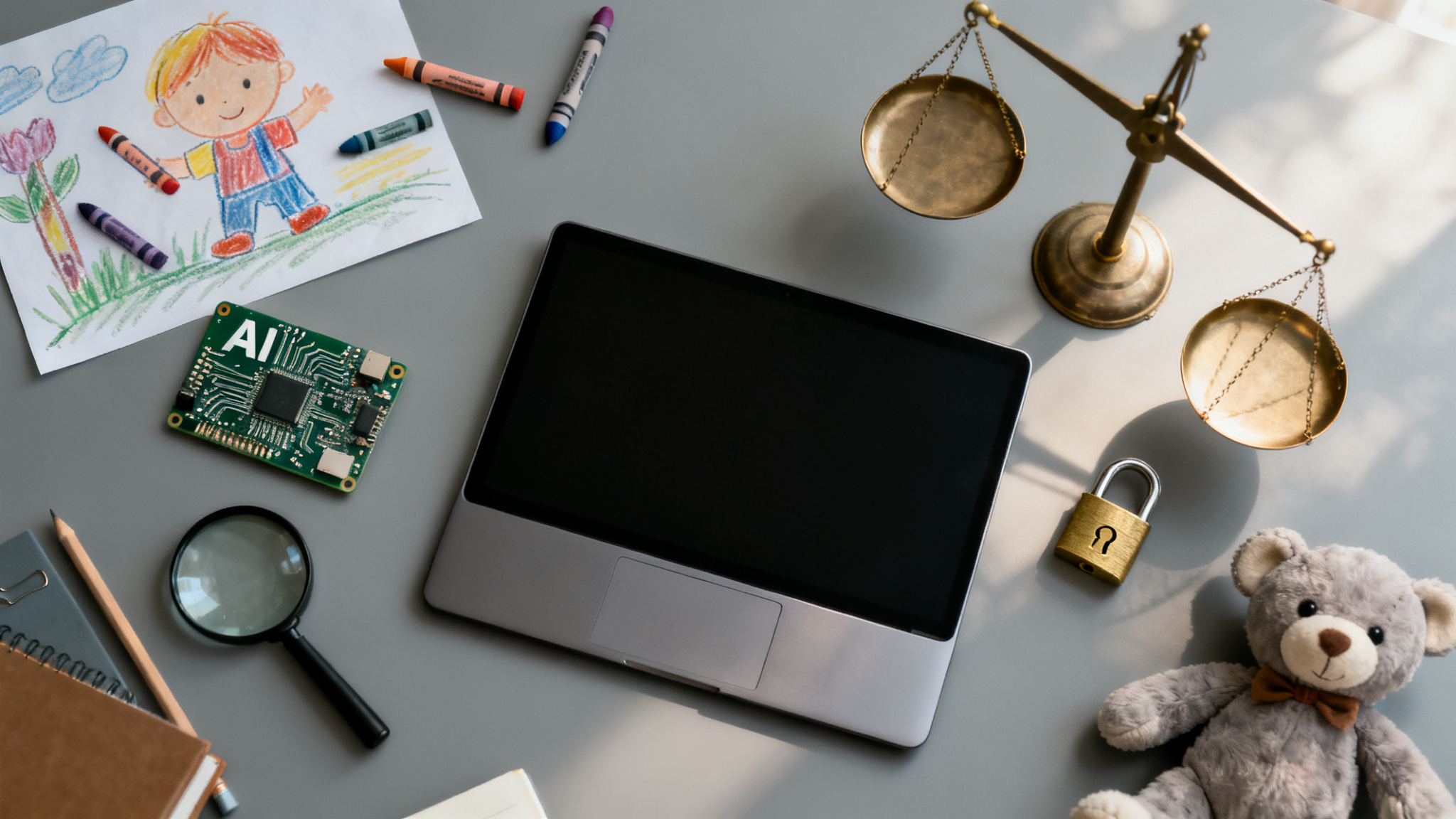
Navigating the Ethical Landscape: Data Privacy, Bias, and Child Safety
The promise of AI in early childhood education often overshadows its inherent risks, yet truly human-centred AI demands a rigorous focus on ethics. Ignoring the potential for data breaches, algorithmic bias, or over-reliance on technology can undermine the very trust essential for effective early learning in Canadian daycares.
Building Trust Through Responsible AI
- Robust Data Privacy: Adhering to principles like data minimization means collecting only essential information, anonymizing it where possible, and securing it with strong encryption. For instance, YochienAI's privacy policy outlines specific practices for protecting sensitive child data collected through observation tools.
- Mitigating Bias: By actively auditing AI outputs and diverse training datasets, educators can help identify and correct biases. A Toronto ECE program, for example, might review an AI's activity suggestions to ensure they reflect the cultural diversity of its children, not just dominant narratives.
- Enhanced Child Safety: Human oversight remains paramount. An AI tool might flag a developmental milestone, but a senior kindergarten teacher in Vancouver always makes the final assessment, ensuring the child's individual context is fully considered.
- Regulatory Compliance: Responsible AI tools are built to comply with Canadian laws like PIPEDA (Personal Information Protection and Electronic Documents Act) and provincial educational data policies, offering a clear legal framework for secure data handling.
Potential Ethical Pitfalls
- Data Vulnerability: Poorly secured platforms risk exposing sensitive information about children and families, leading to privacy breaches. A breach in a small Quebec daycare, even with anonymized data, could erode parental trust instantly.
- Algorithmic Bias in Action:
- Over-reliance and Deskilling: Excessive dependence on AI for observation or assessment could diminish an educator's critical thinking and intuitive judgment, weakening the human connection vital for child development.
- Screen Time and Age Appropriateness: Introducing AI through interactive screens without careful consideration for age-appropriate limits or developmental impact can counteract best practices in early learning.
Navigating these ethical considerations is central to the discussion of Beyond the Hype: What 'Human-Centred AI' Means for Canadian Early Childhood Educators and Why It Matters.
Beyond the Classroom: Advocating for Human-Centred AI in Canadian ECE Policy and Practice
Beyond the Classroom: Advocating for Human-Centred AI in Canadian ECE Policy and Practice
The conversation around artificial intelligence in early learning often feels remote, dictated by tech companies or distant policymakers, yet educators hold the most crucial perspective. The surprising reality is that without the direct, informed voice of a kindergarten teacher in Saskatoon or a daycare director in Montreal, AI tools risk becoming disconnected from the very human needs they claim to serve. ECEs must move beyond passive adoption and actively shape the future of AI in their field.
Educators are uniquely positioned to influence how AI integrates into Canadian early childhood settings. Sharing experiences with tools like YochienAI, which assists with observation and parent updates, directly informs curriculum developers and technology providers about real-world effectiveness and challenges. Professional organizations, such as the Canadian Child Care Federation, play a vital role here, developing guidelines that align AI standards with Canadian values concerning child development and privacy. This collective voice ensures that the principles of "Beyond the Hype: What 'Human-Centred AI' Means for Canadian Early Childhood Educators and Why It Matters" become embedded in practice, not just in marketing materials.
Collaborative design is non-negotiable. ECEs should participate in the co-design and testing phases of new AI applications. Imagine a pilot program in Alberta where educators from diverse settings provide feedback on an AI-powered language development app, ensuring it supports both English and French learners, and respects Indigenous cultural contexts. This direct involvement guarantees tools enhance, rather than hinder, established pedagogical approaches. Furthermore, continuous professional development in AI literacy is essential. Many educators feel unprepared for AI integration, and ongoing training helps them evaluate tools critically and advocate confidently.
Engaging with Canada's Pan-Canadian Artificial Intelligence Strategy means advocating for responsible AI adoption in education. Educators can contribute to discussions that promote equity and support diverse learners, ensuring AI solutions are inclusive for all children, from a Toronto Reggio Emilia program to a rural Newfoundland pre-kindergarten. This proactive engagement ensures AI truly serves Canadian early learning.
The Future is Human: Envisioning AI's Role in a Child-First Canadian ECE
The Future is Human: Envisioning AI's Role in a Child-First Canadian ECE
The most significant impact of artificial intelligence in early childhood education won't be in replacing human interaction, but in *amplifying* it. Many educators fear AI will mechanize learning, yet the true promise lies in freeing up time for deeper, more meaningful human connection. This vision aligns with the core principles of "Beyond the Hype: What 'Human-Centred AI' Means for Canadian Early Childhood Educators and Why It Matters," where technology serves to elevate, not diminish, the irreplaceable role of the ECE. AI tools, when designed ethically, can bridge critical gaps in access and resources across Canada's diverse landscape. Consider a remote community in northern Manitoba, where specialized developmental screening resources are scarce. A human-centred AI application could assist local educators in identifying early indicators of developmental delays, providing targeted support suggestions, and facilitating connections to distant specialists. This doesn't replace the local ECE's observation; it augments it, ensuring more equitable outcomes for vulnerable children. The ultimate goal remains human-driven education, powerfully augmented by intelligent tools. This human-first approach extends to personalized learning. Imagine a senior kindergarten teacher in Surrey, BC, managing 24 children, each with unique learning styles and paces. AI-assisted observation platforms, like YochienAI, can process vast amounts of observational data, highlighting individual child engagement patterns or emerging interests. This allows the teacher to spend less time on administrative tasks and more time on tailored one-on-one interactions, fostering socio-emotional skills and deep learning moments that only a human can provide. Canadian ECEs should embrace this evolving landscape with confidence. Their expertise, empathy, and profound understanding of child development are irreplaceable. The future of AI in early learning is not about machines teaching children; it's about intelligent tools helping educators to do what they do best, with greater insight and impact.Your Questions Answered: Human-Centred AI in Canadian ECE
The conversation around AI in early childhood education often raises more questions than answers, especially for Canadian educators committed to child-first principles. This section cuts through the noise, providing direct answers to common concerns about Beyond the Hype: What 'Human-Centred AI' Means for Canadian Early Childhood Educators and Why It Matters.Your Questions Answered: Human-Centred AI in Canadian ECE
It's AI designed to augment, not replace, human connection and judgment in early learning. Think tools that reduce administrative load for a kindergarten teacher in Saskatoon, allowing more direct interaction with children, or AI that helps identify developmental patterns without making decisions for the educator.
Human-centred AI streamlines tasks like observation documentation, report generation, and activity planning. For instance, a platform like YochienAI can assist an ECE in Vancouver with organizing child observations, freeing up time previously spent on paperwork for more engaging play-based learning activities.
No. The core principle is augmentation. A 2023 survey indicated that many educators feel unprepared for AI integration; human-centred AI aims to equip them, not displace them. It handles data analysis so educators can focus on the unique emotional and social needs of children, like a daycare supervisor in Montreal observing a child's nuanced social interactions.
Data privacy is paramount, especially for children under six. Tools must comply with Canadian privacy laws, like PIPEDA, and clearly outline data use. Bias in algorithms is another concern; AI should be trained on diverse data sets to avoid reinforcing stereotypes, ensuring equity for all children in a diverse province like Ontario.
Prioritize tools with robust encryption, clear consent protocols, and transparent data governance policies. Always ask vendors about data storage locations (preferably within Canada) and access controls. Look for certifications or third-party audits that confirm adherence to privacy standards, similar to how health records are protected.
Frequently Asked Questions
What is human-centred AI in Canadian early childhood education?
Human-centred AI in Canadian early childhood education refers to designing and implementing artificial intelligence tools that prioritize the well-being and developmental needs of children, while augmenting the capabilities of educators. It means AI serves as a supportive assistant, for instance, by analyzing observation data to help an ECE in Calgary identify a child's emerging interests or learning styles. The focus remains on strengthening human connection and professional judgment, ensuring technology enhances, rather than dictates, pedagogical practice and child interaction.
Why does human-centred AI matter for Canadian ECE professionals?
Human-centred AI matters for Canadian ECE professionals because it ensures technology aligns with core pedagogical values: fostering development and human connection. It can reduce administrative burdens, like generating initial drafts of observation reports for a senior kindergarten teacher in Halifax, allowing more time for direct child interaction. This approach prevents AI from becoming a substitute for human educators, instead positioning it as a tool that enhances professional practice, supports individualized learning insights, and upholds ethical standards for young children's data privacy.
How can Canadian early childhood educators evaluate AI tools?
Canadian early childhood educators should evaluate AI tools based on their alignment with provincial curricula, like Ontario's ELECT framework, and strict data privacy protocols. Key questions include: Does the tool clearly state how it uses and protects child data? Is it developmentally appropriate, avoiding excessive screen time or passive consumption? For example, an ECE in Quebec should assess if an AI-powered activity generator truly fosters play-based learning and critical thinking, or merely provides generic, closed-ended suggestions. Transparency, efficacy, and ethical design are paramount.
Are there ethical considerations for using AI with young children in Canada?
Yes, significant ethical considerations exist for using AI with young children in Canada. Primary concerns include data privacy, ensuring compliance with laws like PIPEDA, and preventing algorithmic bias that could misinterpret diverse children's behaviours. Educators must also consider screen time limits and the potential impact on social-emotional development. For instance, an AI tool used for language development should not replace direct human interaction, which is crucial for nuanced communication skills. Transparency with parents and robust data security are essential safeguards.
Can AI enhance learning experiences without replacing human connection in Canadian ECE?
Absolutely. AI can enhance learning experiences without replacing human connection by serving as a powerful support tool for educators. For instance, an AI assistant might help an ECE in a Toronto daycare generate diverse, culturally relevant activity ideas tailored to a child's specific interests, or summarize observation notes to inform personalized learning strategies. The key is using AI to free up educators' time for more meaningful interactions, deeper observation, and direct engagement, ensuring technology amplifies, rather than diminishes, the essential human element in early childhood education.
Frequently Asked Questions
What is human-centred AI in Canadian early childhood education?
Why does human-centred AI matter for Canadian ECE professionals?
How can Canadian early childhood educators evaluate AI tools?
Are there ethical considerations for using AI with young children in Canada?
Can AI enhance learning experiences without replacing human connection in Canadian ECE?
Keep reading
All articles →
Human-Centred AI in Daycare: One Day, Rules, Sample Policy
Human-centred AI in an early learning centre is a working rule: software can assist, but a named educator decides every choice about a child. This guide shows how that plays out day to day, from reviewing automated reports to writing a short family-friendly policy.
A Practical Checklist for Canadian ECEs Evaluating AI Tools
Most AI guidance treats every tool the same way, which is why evaluations stall. This checklist sorts each tool into a lane first, so Canadian ECEs can decide what to ask vendors and when AI belongs in the classroom.

Putting Children First: A Parent's Guide to Human-Centred AI in Canadian ECE
The true irony of "putting children first" in ECE isn't protecting children from AI, but ensuring they aren't passive data points. This involves designing AI tools that prioritize a child's holistic development, well-being, and safety in the unique Canadian context.