
Beyond the Hype: Human-Centred AI in Canadian ECE – A Thoughtful Integration Guide
For Canadian ECE, the opportunity with AI lies in amplification, not just automation. Human-centred AI is essential for thoughtful integration, prioritizing human well-being and ethical considerations.

What is Human-Centred AI and Why Does it Matter in ECE?
What is Human-Centred AI and Why Does it Matter in ECE?
While artificial intelligence often conjures images of autonomous systems, the true challenge—and opportunity—for Canadian early childhood education (ECE) lies in making AI less about automation and more about amplification. Beyond the hype, human-centred AI (HCAI) is essential for thoughtful integration in Canadian ECE because it deliberately prioritizes human well-being, ethical considerations, and the enhancement of human capabilities, rather than replacement. This approach ensures that technology truly supports child development and educator roles without compromising the essential human connection, a principle highlighted by a 2023 Canadian survey finding ECEs prioritize child well-being and ethical tech use above all else.
Human-centred AI defines technology designed with the end-user—children, educators, and parents—at its core. This means focusing on their specific needs, values, and developmental limitations. For instance, an AI tool like YochienAI, which assists with observation and developmental insights, is human-centred when it reduces an educator's administrative load, allowing them more direct interaction time with children, rather than isolating them behind a screen.
The critical role of human interaction in early childhood development is non-negotiable. Research consistently shows that strong, responsive relationships profoundly impact young children's learning and social-emotional growth. Therefore, any AI integration in ECE must augment, not diminish, these vital interactions. A senior kindergarten teacher in Halifax, for example, might use an AI tool to quickly analyze anecdotal notes, freeing up precious minutes to engage in a child-led play scenario, rather than spending that time on data entry.
In Canadian ECE, HCAI means aligning technological solutions with pedagogical frameworks like How Does Learning Happen? in Ontario or the Early Learning and Child Care Framework across provinces and territories. This ensures that privacy concerns, especially regarding children's data, are addressed proactively, mirroring the Canadian government's ethical frameworks for AI use. Human-centred AI cuts through the overwhelming buzzwords by grounding technology in practical, ethical applications that genuinely support the rich, responsive interactions vital for young children's learning and development.
Beyond the Hype: Debunking Common AI Myths in Early Childhood Education
Debunking Common AI Myths in Early Childhood Education
Despite the promise, conversations about artificial intelligence in Canadian early childhood education often begin with apprehension. Many educators and parents fear AI will diminish the irreplaceable human element, yet the reality of human-centred AI offers a surprising counter-narrative: it can actually deepen human connection by streamlining administrative burdens and providing richer insights into child development, ultimately supporting the core work of early learning professionals.
| Aspect | Common Myth | Human-Centred AI Reality in ECE |
|---|---|---|
| Educator Role | AI will replace educators and dehumanize learning. | AI tools, like YochienAI, automate tasks such as observation notes and report generation, allowing educators in, for example, a Greater Toronto Area daycare, to spend more time directly engaging with children and families. |
| Complexity & Access | AI is too complex for ECE professionals to use. | Thoughtful AI design prioritizes intuitive interfaces. Many Canadian ECE programs are already exploring user-friendly platforms that require minimal technical expertise, integrating into daily routines. |
| Benefits & Impact | AI offers no real benefits beyond marketing hype. | AI provides data-driven insights for personalized learning plans, administrative efficiencies, and enhanced parent communication. A 2023 Canadian survey found ECEs open to technology that supports child well-being, confirming a desire for practical benefits. |
| Data Security | Children's sensitive data will be unsafe with AI tools. | Ethical AI in Canadian ECE prioritizes robust data privacy and security, adhering to provincial regulations like Ontario's FIPPA or Quebec's Act respecting the protection of personal information. Clear guidelines protect sensitive information, as outlined by organizations like the NAEYC. |
| Adaptability | AI is a 'one-size-fits-all' solution, ignoring diversity. | Effective human-centred AI is adaptable. Tools can be customized to reflect diverse cultural contexts, varying developmental stages, and specific pedagogical approaches found across Canada's provinces and territories. |
Moving Beyond the Hype: Why Human-Centred AI is Essential for Thoughtful Integration in Canadian Early Childhood Education means understanding that AI's true value lies in its capacity to augment, not erode, the foundational human relationships in early learning. The next step involves exploring the unique Canadian context, ensuring any AI adoption aligns with our national values and regulatory landscape.
The Unique Canadian Context: Navigating AI Ethics and Regulations in ECE
The Canadian Lens: Ethics, Data, and Diversity in ECE AI
While artificial intelligence (AI) offers intriguing possibilities for early childhood education, Canada's unique landscape demands a thoughtful, human-centred approach that prioritizes ethical use and cultural relevance. The federal government's proactive stance on AI governance, exemplified by its 2019 Directive on Automated Decision-Making, sets a national precedent for responsible AI deployment, even influencing sectors like ECE. This directive emphasizes transparency, accountability, and impact assessment, crucial principles for any AI tool interacting with young children.
A primary concern for Canadian parents and educators involves data privacy and security, especially when children’s sensitive information is involved. Provincial regulations, like Ontario's Freedom of Information and Protection of Privacy Act (FIPPA), overlay federal guidelines, creating a complex but robust framework designed to protect personal data. Any AI tool used in a daycare or kindergarten classroom must demonstrate strict adherence to these multi-layered privacy standards. For instance, an AI-assisted observation tool like YochienAI, built in Ontario, must specifically address how it handles and secures child developmental data, ensuring compliance with both federal and provincial privacy expectations. Our Privacy page details these commitments.
Beyond regulation, Canada's profound cultural and linguistic diversity presents another critical consideration. AI tools must not only be technically sound but also culturally sensitive and adaptable. This means moving beyond generic English-language interfaces to include support for French, Indigenous languages, and an understanding of diverse family structures and traditions common across provinces like Manitoba or Quebec. An AI tool designed to support early literacy, for example, should ideally offer resources in multiple languages and reflect a range of cultural narratives, rather than imposing a single perspective.
This underscores the careful balance required.
Thoughtful Integration: A Practical Framework for Canadian Early Learning Settings

While discussions around artificial intelligence (AI) in early childhood education often remain theoretical, the real challenge for Canadian ECE professionals is translating these concepts into practical, ethical integration. The path to thoughtful AI adoption isn't about chasing every new tool, but rather applying a clear, human-centred framework that aligns with pedagogical goals and Canadian values.
Needs Assessment
Identify specific challenges where AI can genuinely augment existing practices, rather than adding complexity. For instance, a daycare in rural Alberta might struggle with detailed, consistent developmental observations across all children. AI-assisted observation tools, like YochienAI, could provide educators with deeper insights, freeing them to focus on direct interaction, rather than extensive note-taking.
Tool Selection
Prioritize AI tools that are transparent, secure, and align with developmental goals. For Canadian ECE, this means scrutinizing a tool's data governance and privacy policies to ensure compliance with provincial regulations, such as Ontario’s FIPPA. Look for tools designed specifically for ECE, emphasizing features that support educators, like AI-assisted observation for developmental insight, rather than child-facing screen time. Our For Schools page details our approach to this.
Pilot and Evaluation
Implement AI tools on a small scale. For example, a senior kindergarten teacher in Halifax could pilot a new AI-powered lesson planning assistant for one month, gathering feedback from colleagues and parents. This iterative process allows for refinement and identification of best practices before broader deployment. A 2023 Canadian survey found ECEs prioritize child well-being and ethical use, making pilot feedback crucial.
Data Governance
Establish clear protocols for data collection, storage, and use. This is paramount for Beyond the Hype: Why Human-Centred AI is Essential for Thoughtful Integration in Canadian Early Childhood Education. Ensure compliance with Canadian privacy laws, like PIPEDA, and ethical standards. This includes explicit consent from parents for any data related to their child, and clear communication about how data is secured and utilized.
Preserving the Human Element: How AI Can Augment, Not Replace, Connection
Preserving the Human Element: How AI Augments Connection
The core fear surrounding artificial intelligence in early childhood education — that it will diminish human connection — often overlooks AI's most valuable application: giving educators more time for direct, meaningful engagement. Rather than replacing the warmth of a teacher's hug or the nuance of a child-led conversation, human-centred AI tools can free up precious minutes previously spent on administrative tasks, allowing for deeper human interaction. This is a critical distinction for Canadian early learning settings, where the emphasis on relationships and responsive care is paramount.
For example, a junior kindergarten teacher in Edmonton might spend 30 minutes daily documenting observations and updating parent logs. Tools like YochienAI, built in Ontario, can automate much of this data collection through AI-assisted observation, summarizing key developmental insights. This frees the educator to engage in an extended one-on-one reading session or facilitate a complex block-building project, directly enhancing their connection with children.
AI also supports personalized learning by identifying individual patterns. A preschool educator in rural Nova Scotia, using an AI-powered assessment tool, might quickly recognize that a child consistently struggles with fine motor skills during drawing activities. This insight allows the educator to proactively introduce targeted play-based interventions, like threading beads or using playdough, fostering a stronger connection through responsive care. Furthermore, these tools can enhance communication with parents, sharing insights into a child's progress and fostering a collaborative support network — a benefit explored further on our For Parents page.
Ultimately, the benefits of thoughtful AI in Canadian daycare settings are rooted in its ability to amplify human capacity. By streamlining routine tasks and providing quick, actionable insights, AI helps educators to be more present, responsive, and connected to the children in their care, reinforcing the essential human element at the heart of early childhood development.
Helping Educators: Training and Support for Human-Centred AI Adoption

Helping Educators: Training and Support for Human-Centred AI Adoption
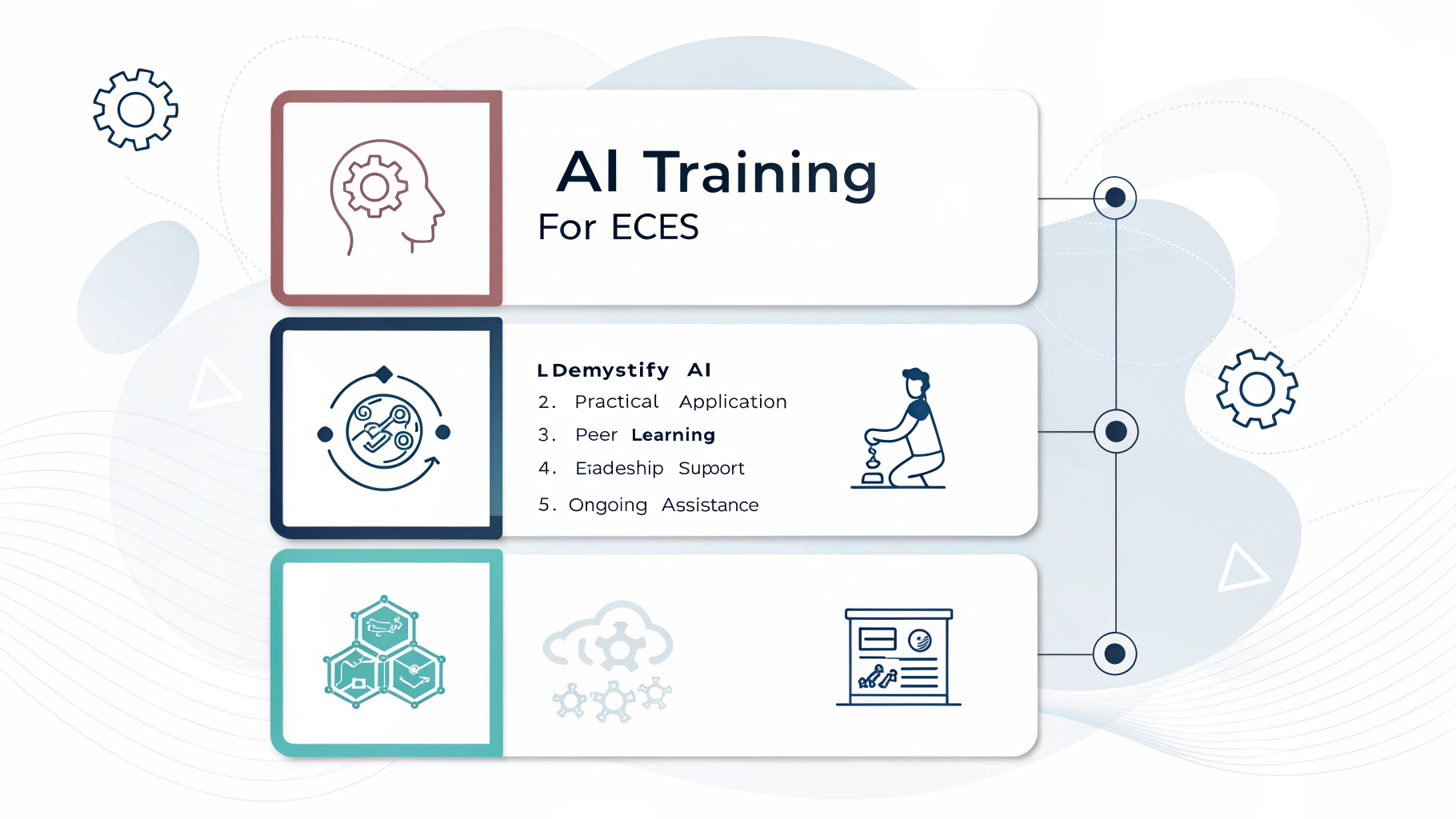
While the allure of AI in education often focuses on the technology itself, the true hurdle for thoughtful integration in Canadian ECE lies not in the tools, but in the human capacity to use them effectively. Many early childhood educators (ECEs) in provinces like Ontario and British Columbia feel overwhelmed by new technologies, not because of unwillingness, but due to a lack of targeted, practical training that demystifies AI and addresses their specific classroom realities. A 2023 Canadian survey confirmed that ECEs are open to technology but prioritize child well-being and ethical use above all else, underscoring the critical need for supportive training that aligns with these values.
Successful adoption of human-centred AI, such as an AI-assisted observation tool like YochienAI, requires comprehensive professional development programs. These programs must move beyond abstract concepts, offering hands-on workshops that demonstrate AI's practical applications—like streamlining administrative tasks or generating personalized activity ideas—while openly discussing ethical considerations such as data privacy and screen time. Incremental training, perhaps starting with a single AI tool and gradually introducing more, helps mitigate overwhelm. Creating peer learning opportunities, where a senior kindergarten teacher in Edmonton can share strategies with a preschool educator in Montreal, fosters a sense of community and collaborative problem-solving. Leadership in ECE centres must champion this shift, providing not just training but also the necessary time and resources for educators to explore and integrate these new methods.
Ongoing technical and pedagogical support is equally vital. This means continuous access to experts who can troubleshoot issues and help educators refine how they integrate AI into their daily routines. For instance, an ECE using an AI tool to analyze children's engagement during play might need guidance on interpreting the data to inform their next lesson plan. This sustained support ensures that AI becomes an intuitive assistant, truly augmenting the educator's expertise rather than adding another layer of complexity. This structured approach is essential for moving Beyond the Hype: Why Human-Centred AI is Essential for Thoughtful Integration in Canadian Early Childhood Education.
Ultimately, giving educators the right knowledge, skills, and consistent support transforms AI from a potential threat into a valuable partner.
Measuring Impact: Evaluating AI Tools with a Child-First Lens
Evaluating AI tools in early childhood education often overlooks the most critical metric: the child's direct experience. While educators might focus on efficiency gains, true human-centred AI integration, as essential for thoughtful adoption in Canadian ECE, demands a rigorous assessment of how these tools impact a child's engagement, well-being, and developmental trajectory.
Assessing AI tools requires a multi-faceted approach, moving beyond simple feature lists to evaluate real-world impact across key areas of early learning and care. The following table outlines crucial evaluation criteria, informed by Canadian ECE priorities and a child-first lens.
| Evaluation Area | Child-First Metric | Educator Impact Metric | Ethical & Operational Metric |
|---|---|---|---|
| Child Well-being | Increased sustained engagement during activities; observed positive social interactions; reduced signs of frustration. | Time saved on routine tasks, allowing more direct child interaction; improved ability to identify individual learning needs. | Screen time adherence (e.g., under 15 minutes for 3-year-olds in a structured activity); data usage transparency with parents. |
| Cognitive Growth | Demonstrated progress in specific literacy/numeracy skills (e.g., recognizing 5-10 new letters); increased problem-solving attempts. | Access to tailored resources for differentiated instruction; reduced time spent on curriculum adaptation. | Algorithmic fairness across diverse learning styles and backgrounds (e.g., no bias against visual learners). |
| Social-Emotional Development | Observed increase in cooperative play; improved emotional regulation during transitions; enhanced empathy in group settings. | Tools that provide insights into group dynamics or individual emotional states, aiding targeted support. | Privacy safeguards for sensitive emotional data; clear opt-out options for families regarding social-emotional tracking. |
| Educator Efficacy | N/A (indirect impact on child via educator). | Reduced administrative burden (e.g. | Integration with existing ECE platforms (e.g., provincial child care management systems); clear technical support channels. |
| Parent & Stakeholder Engagement | Child's ability to articulate learning experiences from AI tools to parents. | Streamlined parent communication (e.g., automated activity summaries); enhanced collaborative goal-setting. | Robust data privacy policies compliant with Canadian provincial regulations (e.g., Ontario's FIPPA); accessible feedback mechanisms for parents. |
The Future of Human-Centred AI in Canadian ECE: Opportunities and Ongoing Vigilance
While the global AI in education market expands, Canadian early childhood education faces a unique imperative: to proactively shape AI integration rather than react to it. The real challenge isn't merely adopting new tools, but ensuring these tools consistently reinforce human connection and pedagogical expertise within our distinct provincial frameworks, such as Ontario's How Does Learning Happen? curriculum.
Anticipating the future means continuous learning. Early childhood educators and policymakers must stay informed about advancements in large language models (LLMs) and computer vision, for example, to adapt strategies effectively. This vigilance ensures that, as AI capabilities evolve, our human-centred approaches remain paramount. Canada’s existing ethical frameworks, like the 2019 'Directive on Automated Decision-Making,' provide a starting point, but more specific guidelines for AI in early learning are necessary and will likely emerge from collaborative efforts between ECE experts, AI developers, and researchers.
This collaboration is crucial for co-creating tools that genuinely meet the sector's needs, such as AI-assisted observation platforms that help educators in a mid-sized Toronto daycare identify developmental patterns more efficiently, freeing them for direct interaction. This approach aligns with the core principle that early childhood development thrives on human interaction. It's about maximizing AI's positive impacts, like reducing administrative burden, while rigorously mitigating risks such as data privacy breaches or excessive screen time for preschoolers.
This sustained effort moves us beyond the hype, ensuring that AI genuinely enhances, rather than detracts from, the richness of early childhood education. To learn more about how we can support this journey, please contact us.
Frequently Asked Questions about Human-Centred AI in Canadian ECE
The conversation around artificial intelligence in Canadian early childhood education often raises more questions than answers, particularly for practitioners focused on the unique needs of young children. While the Canadian government’s ‘Directive on Automated Decision-Making’ (2019) guides public sector AI use, specific, comprehensive guidelines for ECE are still emerging, creating a landscape of both innovation and caution.
Quick Reference: Human-Centred AI in Canadian ECE
Currently, no single federal ECE-specific AI guideline exists. Provincial privacy acts (e.g., Ontario's FIPPA, BC's PIPA) govern data handling. Tools must align with these acts and obtain explicit parental consent. Providers like YochienAI emphasize robust encryption and de-identification to protect child data, ensuring no personally identifiable information is used for AI training.
Human-centred AI augments, it does not replace, human interaction. A 2023 Canadian survey highlighted ECEs' priority on child well-being. AI tools, such as those that analyze observation notes to flag developmental patterns, free up educators to engage more deeply with children, supporting social-emotional growth through direct connection, not through AI itself.
Consider AI-powered observation platforms, such as YochienAI, which help educators in Ontario daycares identify subtle shifts in a child's play or communication. These tools process educator observations to provide insights, like recognizing a child consistently avoiding group activities, prompting the educator to intervene with targeted support. AI does not directly interact with the child; it supports the educator's insight.
Start small: pilot one tool in one classroom, focusing on a clear pedagogical goal like improved observation or personalized activity suggestions. Thoughtful integration means selecting tools that adapt to individual learning styles and paces, such as AI that suggests differentiated activities for a child with specific language needs based on their observed engagement patterns. This supports children with diverse learning needs by providing educators with actionable data.
The primary risk is excessive screen time or diminished human interaction if AI is misused. Benefits include enhanced educator capacity to identify learning opportunities, streamline administrative tasks, and provide more tailored feedback to parents. The key is using AI as a background support for the educator, not as a direct instructional tool for young children.
Frequently Asked Questions
What does human-centred AI mean for early childhood education in Canada?
How can AI be used in Canadian ECE without replacing teachers?
Why is ethical AI integration important for young children in Canada?
Are there specific Canadian regulations for AI use in early learning?
What training do ECE educators need for AI tools in Canada?
Keep reading
All articles →
Human-Centred AI in Daycare: One Day, Rules, Sample Policy
Human-centred AI in an early learning centre is a working rule: software can assist, but a named educator decides every choice about a child. This guide shows how that plays out day to day, from reviewing automated reports to writing a short family-friendly policy.
A Practical Checklist for Canadian ECEs Evaluating AI Tools
Most AI guidance treats every tool the same way, which is why evaluations stall. This checklist sorts each tool into a lane first, so Canadian ECEs can decide what to ask vendors and when AI belongs in the classroom.

Putting Children First: A Parent's Guide to Human-Centred AI in Canadian ECE
The true irony of "putting children first" in ECE isn't protecting children from AI, but ensuring they aren't passive data points. This involves designing AI tools that prioritize a child's holistic development, well-being, and safety in the unique Canadian context.