
Human-Centred AI: Guiding Canadian ECEs Beyond the Hype
Human-centred AI in Canadian ECE deepens human interaction by automating administrative tasks. This reclaims up to 20% of an educator's day, freeing them to engage more directly with children.

Beyond the Buzzwords: Defining Human-Centred AI for Canadian ECEs
Beyond the Buzzwords: Defining Human-Centred AI for Canadian ECEs
While many educators voice valid concerns about AI replacing human connection, the true promise of human-centred AI (HCAI) in Canadian early childhood education (ECE) lies in its surprising ability to *deepen* human interaction. It reclaims some of an educator's day, often spent on administrative tasks, by automating these burdens. This frees them to engage more directly with children, fostering the very connections AI is often feared to diminish. This is a core reason YochienAI and similar tools are emerging in provinces like Ontario, designed not to replace, but to augment.
Human-centred AI in ECE isn't a nebulous concept; it's a deliberate design philosophy. It means creating artificial intelligence tools that prioritize child well-being, educator support, and stringent ethical considerations above all else. Unlike generic AI, which might optimize for efficiency without regard for human context, HCAI explicitly focuses on enhancing the unique pedagogical approaches found in Canadian ECE, such as play-based learning and emergent curriculum.
The 'replacement' myth—the fear that AI will sideline educators—dissolves under the HCAI framework. Instead, HCAI offers augmentation. Consider an Early Childhood Educator in a British Columbia daycare. Instead of manually tracking individual developmental milestones for 16 children, an HCAI tool could offer observational insights, flagging patterns or suggesting resources. This shifts the educator's focus from data entry to direct, meaningful engagement with children, ensuring no child’s unique progress is overlooked.
Core principles guide HCAI: transparency in how data is used, fairness in its application across diverse learners, accountability for its outcomes, and robust privacy protections. For example, any HCAI tool used in a Quebec preschool must clearly explain its data collection methods and ensure alignment with provincial privacy regulations, like those under the Act respecting the protection of personal information in the private sector. This distinguishes HCAI from generic AI, which might lack these intentional design choices crucial for young children.
Ultimately, Beyond the Hype: Why 'Human-Centred AI' is the Guiding Principle for Canadian Early Childhood Educators becomes clear. It's about intentional design. It offers a practical, ethical path forward, ensuring that technology serves as a powerful assistant, allowing educators to dedicate more time to the invaluable human connection that defines quality early learning experiences across Canada.
The 'Why': How Human-Centred AI Nurtures Development in Canadian Children
The 'Why': Nurturing Development in Canadian Children
The common fear that technology will dilute the essential human connection in early learning overlooks a critical point: when designed with children at its core, AI can actually deepen developmental support. Instead of replacing the educator, human-centred artificial intelligence (HCAI) acts as an intelligent assistant, making it possible to address the unique learning trajectory of each child more effectively. This is particularly vital given that much brain development occurs before age five, making early childhood interventions profoundly impactful for lifelong learning outcomes.
Consider a senior kindergarten teacher in Surrey, British Columbia, using an HCAI tool to observe play-based learning. The tool, an AI-assisted observation system, logs patterns in a child's engagement with different activity centres. It might flag that Maya consistently gravitates towards building blocks but rarely interacts with the storytelling corner. This isn't about the AI dictating curriculum; it's about providing the educator with objective data points they might otherwise miss during a busy day, allowing them to gently introduce new stimuli or suggest different interactions.
Human-led, technology-supported learning environments can increase child engagement. This isn't passive screen time. It's about a teacher, now better informed, creating a personalized learning path for Maya, perhaps by integrating blocks into a storytelling activity. This approach fosters creativity and problem-solving, as HCAI tools can offer diverse, open-ended activities that encourage imaginative play and critical thinking, always with the educator's guidance.
Moreover, HCAI strengthens inclusive education. In a busy Halifax daycare, an AI-assisted observation platform like YochienAI for schools can help identify diverse learning needs earlier than traditional methods, sometimes up to three times faster. By analyzing developmental milestones and behavioral patterns, the AI provides educators with insights to tailor support for every child, whether it's adjusting activities for a child with sensory sensitivities or providing enriched challenges for an advanced learner. This early identification ensures more targeted interventions, preserving the crucial human connection that drives genuine development. This is the essence of Beyond the Hype: Why 'Human-Centred AI' is the Guiding Principle for Canadian Early Childhood Educators.
Supporting Educators: AI as a Collaborative Partner, Not a Replacement

Supporting Educators: AI as a Collaborative Partner, Not a Replacement
The most persistent fear surrounding artificial intelligence in early childhood education isn't about AI's capabilities, but rather its perceived threat to the irreplaceable human connection between educators and children. Yet, a truly human-centred approach views AI not as a competitor, but as a powerful, ethical collaborator that frees up valuable time for direct, meaningful interaction.AI's Role in Enhancing the Educator's Capacity
- Alleviating Administrative Burden: Administrative tasks can consume a significant share of an early childhood educator's time. Tools like YochienAI help automate progress reports and parent updates, allowing educators in a Calgary daycare to spend less time typing and more time teaching.
- Generating Developmental Insights: AI-assisted observation platforms, such as YochienAI for Schools, can analyze patterns in child interactions and provide educators with objective insights into developmental milestones or areas needing support. This allows a kindergarten teacher in rural Quebec to make more informed, individualized learning plans.
- Personalized Curriculum Support: Imagine an AI tool that sifts through thousands of resources to suggest activities tailored to a specific child's interest in dinosaurs, or a group's current exploration of local wildlife. This saves educators in a Toronto preschool hours of preparation time, ensuring fresh, relevant content.
- Streamlining Communication: AI can draft initial versions of parent newsletters, daily summaries, and progress reports, ensuring consistent, timely, and personalized communication. A busy ECE in Halifax can quickly review and send updates, keeping parents informed about their child's day and growth.
- Targeted Professional Development: By analyzing anonymized data on curriculum delivery or common child challenges, AI can highlight areas where an educator might benefit from additional training, such as specific strategies for supporting children with diverse learning needs in an Ottawa childcare centre.
AI's Limitations and Ethical Considerations
- Lack of Empathy and Nuance: AI cannot replicate human empathy, intuition, or the ability to respond spontaneously to complex emotional cues. A child's cry or a subtle shift in play dynamics requires a human educator's nuanced understanding.
- Data Privacy and Security: Integrating AI means robust protocols for child data privacy are non-negotiable. Centres must ensure compliance with provincial regulations, such as those in Ontario or British Columbia, to protect sensitive information.
- Risk of Over-Reliance: Educators must remain the primary decision-makers. Over-reliance on AI could diminish critical thinking skills or lead to standardized approaches that overlook individual child uniqueness.
- Bias in Algorithms: AI systems can inherit biases present in their training data, potentially leading to skewed observations or recommendations that do not reflect the diverse cultural or developmental needs of children in Canadian ECE settings.
- Screen Time Concerns: While AI primarily supports educators, any direct child interaction with AI-powered tools must be carefully managed to align with screen time guidelines from organizations like the Canadian Paediatric Society.
Navigating the Canadian Landscape: Policy, Ethics, and Best Practices in ECE AI
Navigating the Canadian Landscape: Policy, Ethics, and Best Practices in ECE AI
While the promise of AI in early learning is compelling, the real challenge for Canadian Early Childhood Educators isn't just adopting new tools, but integrating them ethically and effectively within our unique national context. Many educators in provinces like British Columbia and Quebec express valid concerns about data privacy and the potential for algorithmic bias, yet they also recognize the need for administrative efficiency. This isn't about avoiding AI, but about understanding the specific guardrails and opportunities presented by Canadian policies and pedagogical frameworks.
Canada's approach to AI is shaped by a commitment to privacy and human rights, exemplified by initiatives like the proposed Digital Charter Implementation Act, which seeks to govern AI systems fairly. For ECE settings, this means robust data privacy and security are non-negotiable. Tools designed for early learning, such as YochienAI, must adhere to Canadian privacy laws, ensuring that children's sensitive developmental data is protected through strong encryption and strict access protocols. For instance, a daycare in Calgary using an AI-assisted observation tool needs assurance that its data handling aligns with Alberta's privacy regulations and security standards, which prioritize explicit consent and transparent usage policies. This is crucial for building trust with parents and communities.
Moreover, human oversight remains paramount. AI in ECE should function as an assistant, not a decision-maker. An early learning assistant in a Regina preschool might use an AI tool to flag a child's emerging interest in block play, but the educator's professional judgment determines how to expand on that interest through tailored activities. This ensures that the nuanced understanding of child development, cultural context, and individual needs always resides with the human educator. This principle extends to ensuring equity and accessibility, meaning AI tools must be designed to be inclusive, avoiding biases that could disadvantage children from diverse linguistic or socio-economic backgrounds. A tool that recommends activities, for example, should offer options that resonate with Canada's multicultural tapestry and Indigenous perspectives, rather than a one-size-fits-all approach.
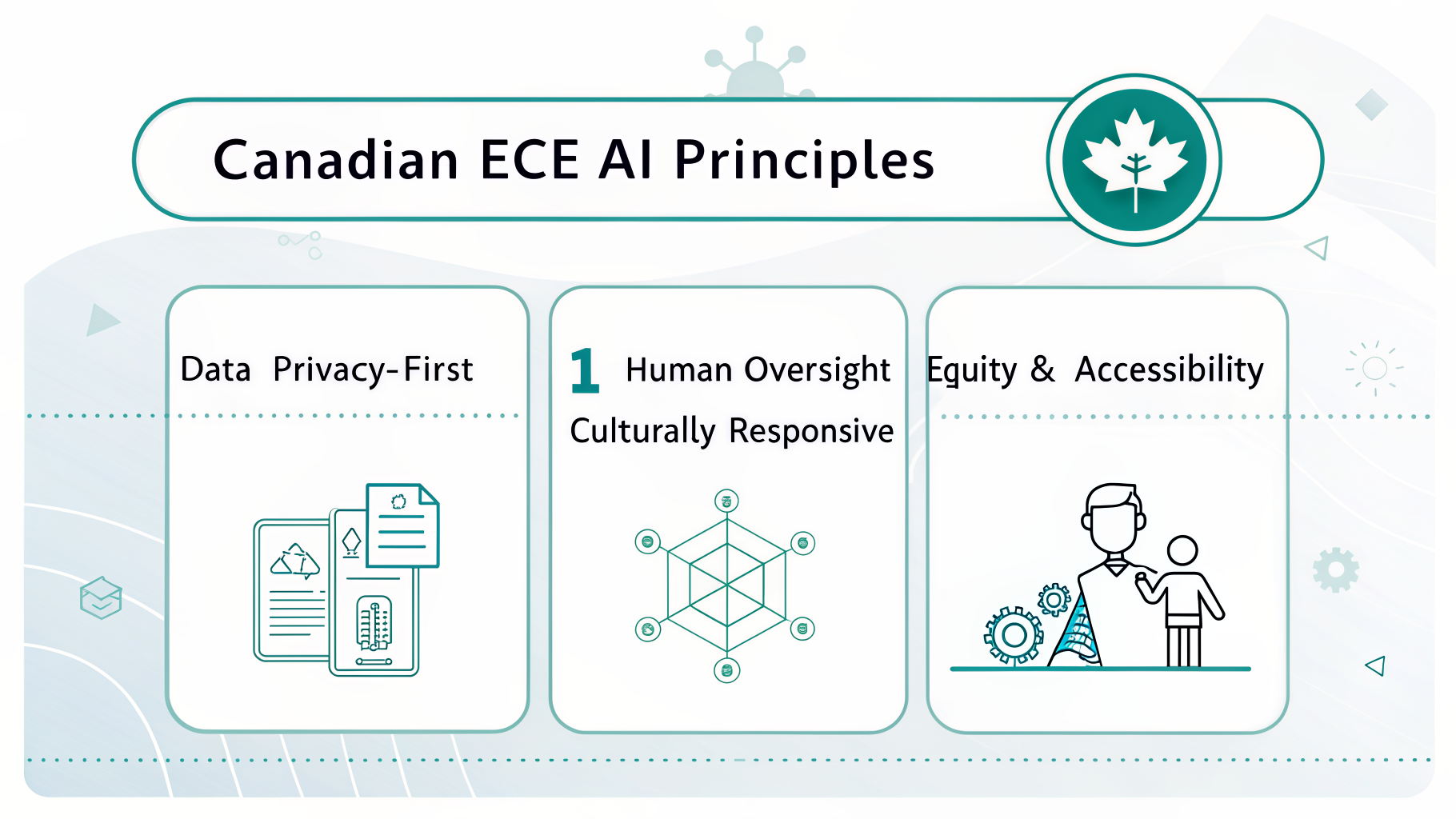
Ultimately, navigating the Canadian landscape for human-centred AI in ECE means continuously evaluating tools against these ethical guidelines. This ensures that the integration of AI truly enhances the educator's role, strengthens child development, and preserves the human connection, rather than replacing it, thereby moving Beyond the Hype: Why 'Human-Centred AI' is the Guiding Principle for Canadian Early Childhood Educators.
From Principle to Practice: Real-World Examples for Canadian Early Learning Settings

From Principle to Practice: Real-World Examples for Canadian Early Learning Settings
The concept of human-centred AI in early childhood education moves beyond theoretical discussions when applied to the daily realities of Canadian classrooms. While the "hype" often focuses on futuristic, autonomous systems, the practical integration of AI is far more grounded, designed to augment, not replace, the essential human element.
Observing Engagement in a Nova Scotia Kindergarten
A kindergarten teacher in Halifax uses an AI-assisted observation tool to track classroom engagement. The tool, which processes anonymized video feeds, identifies patterns in children's interactions with learning centres. For example, it might flag that Mei, a typically quiet learner, has spent less than five minutes at the literacy station over two days. This insight prompts the teacher to offer Mei a one-on-one invitation to explore new books, ensuring no child is overlooked and helping educators move beyond the hype: why 'human-centred AI' is the guiding principle for Canadian early childhood educators.
Individualized Play Plans in an Ontario Daycare
In early-childhood programs, educators may use platforms like YochienAI to document developmental milestones. When a child, like three-year-old Liam, consistently demonstrates strong fine motor skills but less engagement in social play, the AI-assisted observation helps educators identify this trend. The system then suggests specific play-based activities, such as collaborative block building or dramatic play scenarios, tailored to encourage Liam's social interaction while still challenging his motor skills. This data-driven insight frees educators from extensive manual tracking, allowing more direct interaction.
Personalized Literacy Support in a Quebec Preschool
In a Montreal preschool, an AI-powered platform supports early literacy. After a teacher observes five-year-old Sophie showing interest in animals, the system recommends age-appropriate digital storybooks and interactive French language games featuring farm animals. This personalization, based on Sophie's observed interests and vocabulary level, makes learning more engaging than a generic curriculum. The AI acts as a content curator, not a tutor, with the teacher guiding Sophie through the activities.
Streamlined Parent Communication in an Alberta Childcare Centre
An Edmonton childcare centre employs an AI-powered communication platform to enhance home-school connections. At the end of the day, educators quickly input observations and activities. The platform then generates concise, personalized summaries for each child, securely sharing photos and developmental notes with parents via a dedicated app. This system, exemplified by tools integrated with YochienAI for Parents, drastically reduces administrative time, allowing educators to focus on direct child interaction during operational hours.
Building Trust: Addressing Parent and Community Concerns About AI in Daycare
Building Trust: Addressing Parent and Community Concerns
The true hurdle for AI in Canadian early childhood education isn't technological capability; it's earning the trust of parents and the broader community. Many Canadian parents express legitimate concerns about technology's role in early learning, often prioritizing data privacy and direct human interaction above all else, according to recent surveys on attitudes towards AI in early childhood settings.| Parent Concern | Human-Centred AI Approach | Real-World Example (Canadian Context) |
|---|---|---|
| "AI will replace human teachers." | AI as an assistant, enhancing educator capacity. | A senior kindergarten teacher in Edmonton uses an AI-powered observation tool to quickly summarize daily play themes, freeing up 30 minutes to engage directly with children in creative play. |
| "What happens to my child's data?" | Transparent data policies and robust security. | A daycare in Vancouver explicitly outlines its data encryption protocols and anonymization practices for AI tools, adhering to Canadian privacy standards (like those described on YochienAI's privacy page). |
| My child will have too much screen time. | AI primarily supports educators, not direct child-facing screens. | An early childhood educator in Halifax uses an AI tool to identify patterns in a child's fine motor skill development *after* the child has gone home, informing the next day's hands-on activities, not replacing them. |
| Users may not need to know how it works. | Open communication, workshops, and clear explanations. | A Toronto early learning centre hosts "Tech Talk" evenings, demonstrating tools like YochienAI and explaining how they help educators track developmental milestones, allowing parents to ask questions directly. |
The Future is Human: A Vision for AI in Canadian Early Childhood Education
The conversation around artificial intelligence in early childhood education often focuses on what AI might replace. Instead, the future for Canadian ECEs lies in how AI can amplify human connection and insight, turning a fear of automation into a tool for deeper, more personalized child development.
Next Steps for Canadian ECEs with Human-Centred AI
Participate in provincial or regional pilot projects exploring new Human-Centred AI (HCAI) applications. For instance, a daycare in Nova Scotia might trial an AI-assisted observation tool to streamline daily record-keeping, freeing educators to engage more directly with children during free play.
Engage in regular professional development. Resources from organizations like the Canadian Centre for Child Protection or the Council of Ministers of Education, Canada often publish guidelines on technology use in early learning, ensuring AI integration remains ethical and privacy-compliant.
Investigate made-in-Canada solutions designed specifically for ECE. Platforms like YochienAI, developed in Ontario, offer AI-assisted observation and developmental insights, directly addressing the needs of Canadian educators while adhering to local privacy standards.
The AI in education market is expected to grow considerably. This growth will bring further advancements in adaptive learning systems—AI that adjusts content based on a child's real-time engagement—and tools for identifying developmental patterns, all designed to support, not supplant, the educator.
Recognize that AI’s role is to enhance the irreplaceable human connection in early learning. A senior kindergarten teacher in Vancouver might use an AI tool to quickly analyze a child's engagement with various learning stations, then use that data to tailor their one-on-one interactions, focusing on social-emotional development rather than just academic progress.
The journey forward for Canadian early childhood educators is not about passively accepting technology, but actively shaping it. This means moving Beyond the Hype: Why 'Human-Centred AI' is the Guiding Principle for Canadian Early Childhood Educators. By participating in discussions, trialing new tools, and prioritizing ethical considerations, ECE professionals can ensure AI remains a powerful ally in fostering environments where every child thrives, supported by both current insight and profound human care.
Frequently Asked Questions
What is human-centred AI in Canadian early childhood education?
Human-centred Artificial Intelligence (AI) in Canadian early childhood education places the educator and child at its core. It means using AI tools, computer systems that perform tasks typically requiring human intelligence, to support, not dictate, learning. For instance, an AI might analyze observation notes for a senior kindergarten teacher in British Columbia, highlighting developmental trends in a child's social play. The goal is to enhance human connection and pedagogical practice, ensuring technology serves the child's holistic development and the educator's professional judgment, rather than replacing essential human interaction.
How can AI support child development in Canadian daycare settings?
AI can indirectly support child development by helping educators in Canadian daycare settings. It could also generate diverse story prompts or craft ideas, like Magic School AI does, saving educators planning time. This allows early childhood educators to dedicate more attention to direct child interaction, observation, and individualized support, fostering social-emotional skills and cognitive growth through human connection, not screen-based AI interaction.
How does human-centred AI support early childhood educators in Canada?
Human-centred AI helps Canadian early childhood educators by streamlining routine tasks, allowing them to focus on direct child engagement. For instance, an AI assistant could help a preschool teacher in a Winnipeg centre generate individualized learning reports or draft parent communication, summarizing a child's progress in fine motor skills. This reduces administrative burden and provides quick access to research-backed activity ideas, amplifying an educator's capacity. The AI acts as a smart assistant, enhancing their professional judgment and freeing up valuable time for observation, interaction, and responsive care.
Are there ethical guidelines for using AI in Canadian early learning?
Yes, ethical guidelines for AI in Canadian early learning prioritize child safety, privacy, and developmental appropriateness. Key principles include ensuring data anonymization, obtaining explicit parental consent for any data collection, and rigorously evaluating AI tools for potential biases in their algorithms. For example, provincial privacy legislation, such as Ontario's PHIPA, already governs how personal information is handled. Educators must maintain human oversight, ensuring AI recommendations align with professional judgment and do not replace essential human interaction, while also considering screen time implications for young children.
Can parents trust AI tools used in Canadian daycares?
Parents can trust AI tools in Canadian daycares when transparency and human oversight are paramount. Daycares must clearly communicate their AI usage policies, detailing what data is collected, how it's protected, and for what purpose, as mandated by privacy laws like Canada's PIPEDA. For instance, if a centre in Vancouver uses an AI-powered activity planner, parents should understand it assists educators, not replaces their planning. Trust is built through open dialogue, ensuring educators remain the primary decision-makers, and that AI supports, rather than dictates, the child's learning experience and minimizes screen time for children.
Frequently Asked Questions
What is human-centred AI in Canadian early childhood education?
How can AI support child development in Canadian daycare settings?
How does human-centred AI help early childhood educators in Canada?
Are there ethical guidelines for using AI in Canadian early learning?
Can parents trust AI tools used in Canadian daycares?
Keep reading
All articles →
Human-Centred AI in Daycare: One Day, Rules, Sample Policy
Human-centred AI in an early learning centre is a working rule: software can assist, but a named educator decides every choice about a child. This guide shows how that plays out day to day, from reviewing automated reports to writing a short family-friendly policy.
A Practical Checklist for Canadian ECEs Evaluating AI Tools
Most AI guidance treats every tool the same way, which is why evaluations stall. This checklist sorts each tool into a lane first, so Canadian ECEs can decide what to ask vendors and when AI belongs in the classroom.

Putting Children First: A Parent's Guide to Human-Centred AI in Canadian ECE
The true irony of "putting children first" in ECE isn't protecting children from AI, but ensuring they aren't passive data points. This involves designing AI tools that prioritize a child's holistic development, well-being, and safety in the unique Canadian context.