
Empowering Advocates: Human-Centred AI for Canadian Early Learning
The real challenge for Canadian early learning isn't just adopting AI, but ensuring it prioritizes human connection. Human-centred AI must augment the irreplaceable bond between children and educators, not diminish it.

What is Human-Centred AI and Why is it Essential for Early Learning?
What is Human-Centred AI and Why is it Essential for Early Learning?
While the global AI in education market projects to exceed $20 billion by 2027, the real challenge for Canadian early learning isn't simply adopting AI, but ensuring it prioritizes human connection above all else. Putting Children First: Why Human-Centred AI is the Only Way Forward for Canadian Early Learning hinges on a fundamental shift: AI must augment the irreplaceable human bond between children and educators, not diminish it. This approach directly addresses the core parental fear, noted in a 2022 Canadian survey, where over 60% of parents expressed concern about their children's data privacy online.
Human-centred AI (HCAI) is a design philosophy that places human well-being, ethical considerations, and meaningful interaction at the forefront of technological development. Unlike generic AI, which might focus purely on efficiency or automation, HCAI in early learning is specifically tailored to support developmental goals without compromising the rich, nuanced interactions critical for young children. For instance, an HCAI tool like YochienAI assists educators in observing and documenting child development, freeing up time for direct engagement rather than replacing the teacher's role in the classroom.
This commitment to human augmentation, not replacement, is essential. Research consistently shows that early childhood experiences significantly shape brain development, emphasizing the critical importance of high-quality, human-led interactions. HCAI tools are designed with transparency and accountability built-in, ensuring that their operations are understandable and their impact on children is carefully monitored. For a junior kindergarten program in British Columbia, this could mean using an AI tool to suggest diverse activity ideas based on observed play patterns, empowering the educator to offer more personalized learning experiences, rather than dictating curriculum or replacing face-to-face instruction.
"We need AI that helps our educators spend more time *with* the children, not less. If a tool doesn't support that core mission, it doesn't belong in our classrooms." — Kindergarten administrator, Toronto
Understanding "child-first AI in early learning" means recognizing AI as a powerful assistant to empower educators and families, rather than a standalone solution. It emphasizes fairness, ensuring that AI recommendations are unbiased and developmentally appropriate. This distinction is crucial as Canadian early learning environments consider adopting new technologies, ensuring that any AI integration genuinely enhances the educational experience and protects the unique needs of young learners.
The 'Children First' Imperative: Understanding Developmental Needs and AI's Role
The 'Children First' Imperative: Understanding Developmental Needs and AI's Role
The true irony of AI in early learning is that its greatest strength lies not in replacing human interaction, but in amplifying it. While the global AI in education market projects to exceed $20 billion by 2027, the critical question for Canadian early learning isn't *if* AI will be present, but *how* it will be shaped by a "children first" imperative. This means integrating developmental psychology principles deeply into every AI design and implementation, ensuring technology supports—rather than hinders—the critical growth stages of children aged 0-6. Research consistently demonstrates that early childhood experiences profoundly shape brain architecture and future learning capacity. This emphasizes the irreplaceable value of high-quality, human-led interactions. For instance, a senior kindergarten teacher in Halifax needs tools that help her track nuanced social-emotional cues, not screens that distract from direct play. Human-Centred AI (HCAI) must be designed to enhance social-emotional learning, cognitive development, and creative play, aligning with established developmental milestones like those outlined in Ontario's "How Does Learning Happen?" framework."We're not looking for AI to teach the kids their ABCs. We need it to give us better insights, faster, so we can spend more time actually teaching and connecting." — Early Childhood Educator, Vancouver IslandThis approach, deeply rooted in "Putting Children First: Why Human-Centred AI is the Only Way Forward for Canadian Early Learning," helps address common parental anxieties, particularly around screen time. When a tool like a smart-toy companion offers adaptive storytelling based on a child's expressed interests, it becomes a purposeful interaction, not just passive viewing. By demanding that AI serves the child's holistic development, parents and educators can advocate for solutions that truly enhance, rather than diminish, the rich, human-centric environment essential for early learning.
Navigating the Canadian Context: Regulations, Ethics, and Best Practices for AI in ELCC

Navigating the Canadian Context: Regulations, Ethics, and Best Practices for AI in ELCC
The Canadian federal government's substantial investments in early learning and childcare, totaling billions over recent years, create a crucial opportunity for thoughtful AI integration. This commitment mandates that any AI tools introduced into preschools and daycares must align with national priorities for child well-being and development, not just technological innovation. This unique landscape demands active advocacy from families and educators to shape 'Canadian guidelines for AI in preschools' that truly put children first. Understanding privacy laws is paramount when considering AI in Canadian early learning. The federal Personal Information Protection and Electronic Documents Act (PIPEDA) governs how private sector organizations collect, use, and disclose personal information. For instance, any AI tool like an observation assistant used in a Calgary daycare must comply with PIPEDA, ensuring that a child's developmental milestones or attendance records are protected. Provincial laws, such as Alberta's Freedom of Information and Protection of Privacy Act (FOIP), also apply to public sector entities like school boards, adding layers of protection that educators and parents must understand. A 2022 Canadian survey indicated that over 60% of parents are concerned about their children's data privacy online, highlighting the need for robust safeguards."We need clear, practical guidance on what 'ethical AI' means for our three-year-olds, not just abstract principles. Show me how it protects my students' data and supports their play." — kindergarten administrator, TorontoThe urgent need for ethical guidelines in AI development, particularly for vulnerable populations like children, was emphasized in a 2023 report by the OECD. Canada is actively considering these recommendations. Best practices for 'ethical AI for children's education Canada' include transparent data collection—meaning parents know precisely what data an AI tool like a speech recognition app is gathering from their child in a Vancouver preschool. Robust security measures, such as encryption and secure data storage, are non-negotiable. Clear consent processes, ideally opting-in, must be in place before any child's data is used.
Ensuring ethical AI use in Canadian early learning environments requires specific commitments from providers and clear expectations from parents and educators. This table outlines key areas of focus:
| Ethical Principle | Practical Application in ELCC | Example Tool/Scenario |
|---|---|---|
| Data Transparency | Clear communication on data collected, purpose, and storage. | Parents informed exactly what data a YochienAI observation tool captures about their child's engagement. |
| Privacy & Security | Adherence to PIPEDA; robust encryption and access controls. | A Quebec daycare's AI-powered daily report system uses end-to-end encryption for all child development notes. |
| Child-Centred Design | AI augments human interaction, does not replace it; age-appropriate. | An AI tool suggests personalized storybooks based on a child's interests, but the educator reads the story. |
| Bias Mitigation | Algorithms tested for fairness
Practical Applications: How Human-Centred AI Tools Enhance, Not Replace, Educator RolesPractical Applications: How Human-Centred AI Tools Enhance, Not Replace, Educator RolesThe core irony of AI in early learning is that its most effective applications don't involve children directly interacting with screens; instead, they empower educators to spend more meaningful time with children. Human-centred AI functions as a sophisticated assistant, providing insights and streamlining tasks that often consume valuable educator time in Canadian early learning programs. This approach directly addresses the common apprehension that AI will diminish the vital role of the early childhood educator. Consider AI-assisted observation tools, which can help educators track developmental milestones more efficiently. For example, a senior kindergarten teacher in Vancouver might use a tool like YochienAI for Schools to document observations of a child's fine motor skills during block play. This data, compiled and analyzed by the AI, informs individualized learning plans, allowing the teacher to focus on direct engagement rather than manual record-keeping. Research consistently shows that early childhood experiences significantly shape brain development, underscoring the importance of high-quality, human-led interactions, which these tools facilitate. Beyond observation, AI can generate personalized learning recommendations. A daycare educator in rural Nova Scotia could receive AI-driven suggestions for activities tailored to a specific child's emerging interest in animals or their pace in developing pre-literacy skills. This enhances engagement without replacing human instruction. Moreover, administrative burdens like record-keeping, attendance tracking, and parent communication can be streamlined by AI, giving educators in settings from Toronto to Calgary more time for creative planning and direct interaction with children. "AI isn't about replacing my eyes or my heart in the classroom; it's about giving me a better lens and more time to connect with each child." — preschool director, Edmonton Early identification of learning challenges or special needs also benefits from AI analytics. By identifying patterns in a child's development, AI can flag potential areas requiring attention, enabling timely interventions and collaborative support from specialists. For instance, a tool like YochienAI for Specialists can provide data-driven insights to speech-language pathologists working with a child in an Ontario early learning program. While comprehensive Canadian case studies are still emerging, initial implementations demonstrate AI's potential to provide educators with richer insights into child behavior and progress, fostering deeper understanding and more effective teaching strategies. This is critical for Putting Children First: Why Human-Centred AI is the Only Way Forward for Canadian Early Learning, ensuring technology serves the child's developmental journey rather than dictating it. Addressing Parental Concerns: Data Privacy, Screen Time, and Fostering Social-Emotional GrowthAddressing Parental Concerns: Data Privacy, Screen Time, and Fostering Social-Emotional GrowthParents naturally worry about new technologies in their children's early learning environments, especially when it comes to AI. These anxieties often center on data privacy, screen time, and the potential impact on social-emotional development. Human-centred AI (HCAI) directly addresses these concerns by design, prioritizing child well-being above all else.Reassurances for Parents
Common Parental Anxieties
A Child-Centred Checklist: Evaluating AI Tools for Canadian Early Learning Environments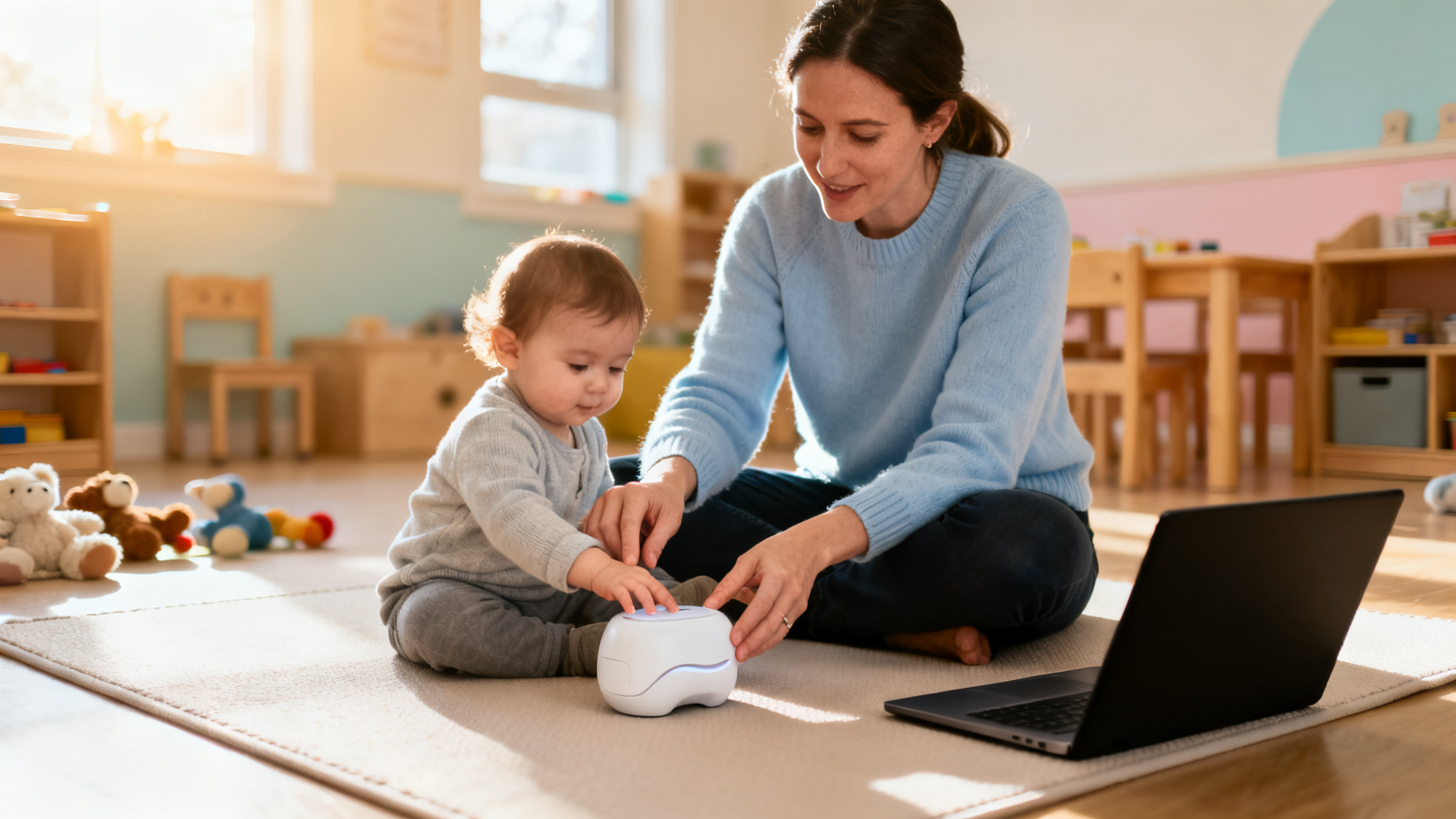 Evaluating artificial intelligence (AI) tools for early learning requires more than just reviewing features; it demands a critical lens focused squarely on the child. Parents and educators must become advocates, equipped to discern truly human-centred solutions from those that merely automate tasks without developmental consideration. This checklist offers a practical framework to assess whether an AI tool genuinely supports a "children first" approach in Canadian early learning environments.
1
Prioritize Developmental AlignmentDoes the AI tool enhance natural learning processes, rather than replacing essential hands-on exploration and social interaction? For instance, an AI tool like YochienAI assists educators in observing developmental milestones in a junior kindergarten classroom, providing insights that support individualized learning plans, not screen-based instruction. Avoid tools that promote passive consumption over active engagement.
2
Demand Robust Privacy & SecurityGiven that a 2022 Canadian survey indicated over 60% of parents are concerned about their children's data privacy, inquire about adherence to Canadian privacy laws like PIPEDA. A reputable AI provider will offer transparent data policies, robust encryption, and require explicit consent mechanisms from parents for any data collection. Ensure the tool does not collect unnecessary personal information.
3
Verify Educator Augmentation, Not ReplacementTrue human-centred AI reduces administrative burdens for educators, freeing them to engage more deeply with children. Consider how an AI might assist a senior kindergarten teacher in Edmonton with lesson planning or provide insights into group dynamics, allowing them more time for direct interaction, rather than simply automating instruction. The goal is to amplify human capacity. "If an AI tool doesn't give my staff more time to connect with the children, it's not truly helping us." — kindergarten administrator, Toronto
4
Assess Engagement & Interaction QualityAn AI tool should promote active, hands-on learning and social interaction, not encourage solitary screen time. For a three-year-old in a Montreal daycare, this means an AI might suggest group activities based on observed interests, rather than providing an individual tablet-based game. The interface must be intuitive and age-appropriate, fostering curiosity.
5
Insist on Transparency & ExplainabilityParents and educators should easily understand how an AI tool functions. Ask how its recommendations are generated and what data informs its insights. This clarity builds trust and allows for
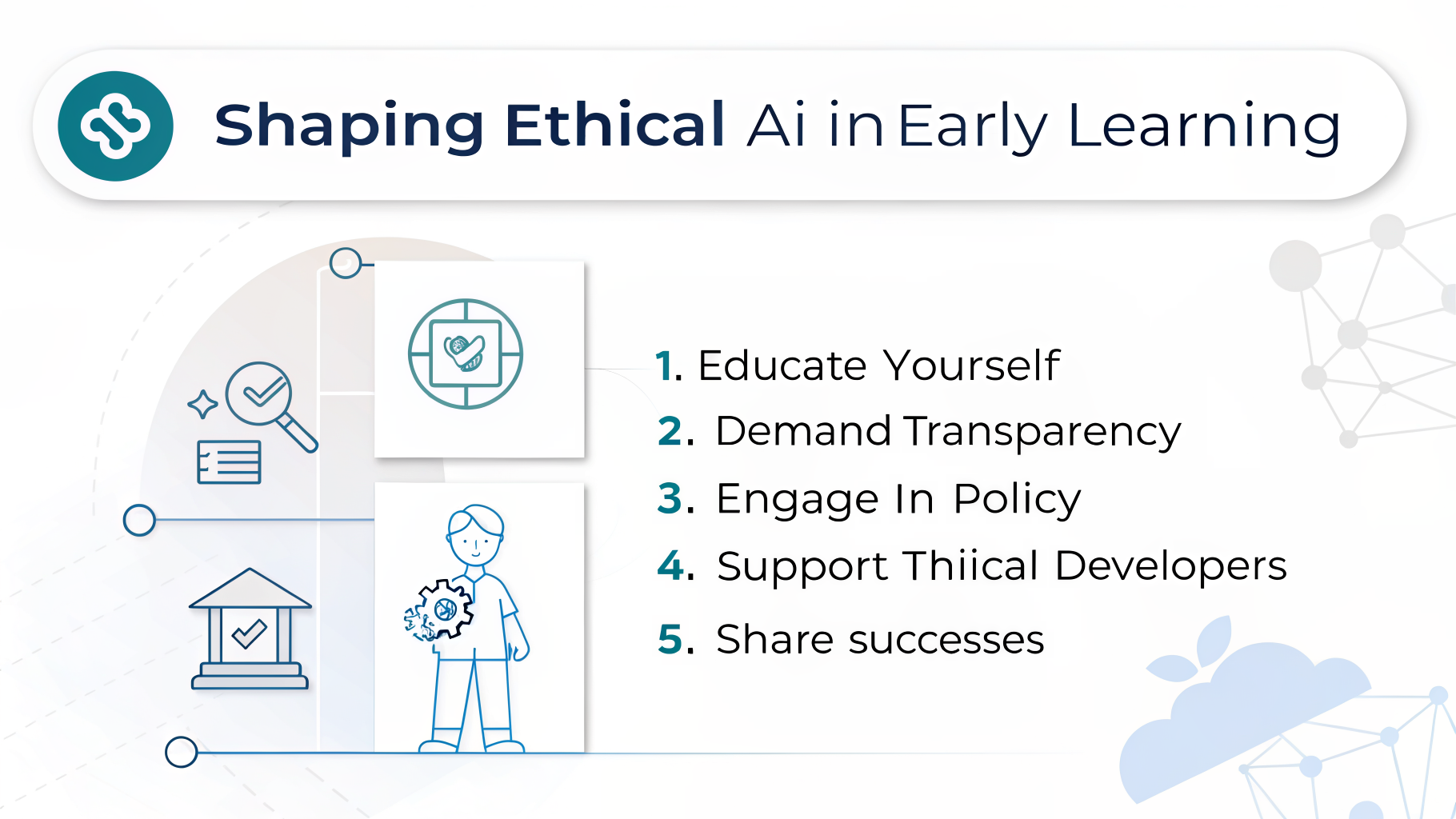
The future of AI in Canadian early learning is not predetermined; it will be shaped by the active engagement of parents, educators, and policymakers. While the global AI in education market is projected to exceed $20 billion by 2027, this rapid growth often outpaces ethical considerations. Advocates must proactively demand systems that genuinely support educators and children, rather than simply adopting whatever technology emerges. This means becoming informed, asking incisive questions, and participating in the discussions that define ethical AI. To implement human-centred AI in Canadian daycares and preschools, begin by educating yourself and your community. Understand what AI tools like Natural Language Processing (NLP)-driven observation platforms offer, and critically evaluate their developmental appropriateness. Share this knowledge with other parents in your local community centre or educators at your child's JK/SK program in Alberta. Next, demand transparency from providers and vendors. Ask specific questions about data practices, privacy protocols, and the pedagogical philosophy underpinning their tools. For instance, a 2022 Canadian survey indicated over 60% of parents are concerned about their children's data privacy online; this concern warrants direct, clear answers from any AI provider. Engage with policy discussions at all levels of government. Provincial education ministries, for example, frequently hold consultations on technology in schools. Your input ensures that the unique needs of young children are considered in broader AI ethics guidelines. Support developers who prioritize human-centred design, such as YochienAI, which explicitly builds its platform around AI-assisted observation to enhance, not replace, human insight. Finally, share success stories. When a technology genuinely enhances early learning experiences, perhaps by freeing up a teacher's time from administrative tasks to engage more deeply with children, highlight these benefits to build a positive narrative around Putting Children First: Why Human-Centred AI is the Only Way Forward for Canadian Early Learning. By taking these proactive steps, parents and educators become powerful advocates, ensuring that AI integration in Canadian early childhood education aligns with the paramount goal of fostering healthy development and rich human
Many parents and educators approach artificial intelligence (AI) in early learning with a mix of curiosity and apprehension. It's not about whether AI will enter the classroom, but how we ensure its integration genuinely supports children's development and strengthens the human connections at the heart of early education. No. Human-centred AI (HCAI) is designed to assist, not substitute. It provides educators with tools—like YochienAI's observation insights—to streamline administrative tasks and personalize learning, freeing them to focus more on direct interaction and individualized support. Research consistently shows that high-quality, human-led interactions are crucial for brain development. Demand transparency. Look for providers that clearly state adherence to Canadian privacy laws, such as PIPEDA (Personal Information Protection and Electronic Documents Act), and offer robust security measures like data encryption. Always review privacy policies; for instance, YochienAI's Privacy Policy outlines its commitment to data protection. A 2022 Canadian survey indicated over 60% of parents share this concern, so clear policies are paramount. Human-centred AI prioritizes the child's well-being, developmental needs, and ethical considerations above all else. Unlike some AI that might focus solely on efficiency or data collection, HCAI ensures technology serves human goals, fostering meaningful learning experiences without unintended side effects. HCAI tools typically support educators with insights to facilitate real-world social interactions and emotional regulation strategies, not by direct child-AI interaction. For example, an HCAI system might flag a child in a Toronto daycare who rarely engages in group play, prompting the educator to introduce specific peer activities. Screen time is minimal, purposeful, and balanced, used primarily by the educator. Comprehensive federal guidelines are still evolving. For now, consult provincial education ministries—like Ontario's Ministry of Education—and organizations such as the OECD for current best practices and ethical frameworks. Your active advocacy helps shape these future guidelines, ensuring they align with "Putting Children First: Why Human-Centred AI is the Only Way Forward for Canadian Early Learning." Look for benefits that enhance, not replace, human connection. These include personalized learning insights for educators (e.g., identifying a specific
Making Smart Choices for Canadian ECE: How to Evaluate AI Tools with Critical Thinking often means looking past the marketing hype to understand what AI actually does. The true value in early learning isn't just adopting new tools, but discerning their alignment with play-based learning and holistic development. Human-Centred AI (HCAI) in Canadian early childhood education (ECE) isn't about complexity; it's about intentional simplicity. It aims to augment educator observation skills and deepen parent engagement, ensuring technology serves children's developmental needs. Canadian ECEs face an overwhelming influx of new AI tools, many ill-suited for young children's unique developmental needs. This demands a structured approach to prevent pedagogical missteps and privacy breaches as the AI in education market skyrockets. |