

Human-First AI: ECEs' Guide to Tech That Supports, Not Replaces, Development
Canadian ECEs face the challenge of ensuring AI prioritizes human connection and child well-being. A Human-First AI approach audits tools to enhance, not replace, critical "serve and return" interactions.

Human-First AI: How Canadian ECEs Can Ensure Technology Supports, Not Replaces, Early Childhood Development
While many educators fear AI will diminish the irreplaceable human element in early childhood education, the real challenge for Canadian ECEs isn't *if* AI will enter their centres, but *how* they will ensure its implementation prioritizes human connection and child well-being. A Human-First AI approach means actively auditing tools to confirm they enhance, rather than replace, the critical "serve and return" interactions foundational to brain development in children under five, as emphasized by Canadian early learning frameworks.
This article provides a practical framework for Canadian ECEs to confidently select, implement, and evaluate AI tools. It moves beyond general discussions, offering concrete strategies to integrate technology in ways that genuinely amplify human interaction and support holistic development, addressing common concerns about potential negative impacts on social-emotional skills, creativity, and screen time.
The goal is to demystify AI, transforming it from a source of apprehension into a powerful assistant. By understanding how tools like AI-assisted observation platforms can free up an ECE's time from administrative tasks, a senior kindergarten teacher in Halifax, for example, gains more opportunities for direct, responsive engagement with children, ensuring technology serves as a valuable support, not a substitute, for the educator's essential role.
Foundations of Human-First AI: Defining Principles for Canadian ECEs
Foundations of Human-First AI: Defining Principles for Canadian ECEs
The true irony of AI in early childhood education (ECE) is that its greatest value lies not in what it *does*, but in what it *frees educators to do*. Human-first AI doesn't automate the educator's role; it augments it, giving back precious time for the responsive, "serve and return" interactions critical for brain development in the first five years. This approach aligns directly with Canadian ECE values, emphasizing play-based learning and holistic child development as outlined by organizations like the Council of Ministers of Education, Canada. For Canadian ECEs, human-first AI means technology designed to enhance, not diminish, human connection. It acknowledges that no algorithm can replicate the nuanced empathy of an ECE responding to a child's unique needs. Instead, AI tools should offload administrative burdens, allowing teachers in, for instance, a large Toronto daycare, to spend more time engaging directly with children. The fear of AI replacing the irreplaceable human element is understandable, but misplaced; its purpose is to create more opportunities for meaningful human interaction."I don't need a robot to read stories. I need something that helps me track observations faster so I can actually *be present* for the story." — kindergarten administrator, TorontoEthical AI implementation in Canadian preschools demands transparency, accountability, and an unwavering focus on child well-being and privacy. This means understanding how data is collected, used, and protected, a commitment central to platforms like YochienAI, which is built in Ontario with privacy
Identifying AI Tools That Truly Support, Not Supplant, ECE Practices

The first step in genuinely adopting Human-First AI for Canadian early childhood educators involves discerning which tools truly enhance learning environments without diminishing the irreplaceable human element. Many AI tools are marketed broadly, but ECEs need a specific lens to evaluate their fit for young children.
Human-First AI Audit: Key Criteria for ECEs
Prioritize AI that streamlines tasks like record-keeping, observation notes, or scheduling. This frees up educators for direct “serve and return” interactions, which are critical for early brain development, as highlighted by neuroscience research.
Seek tools that provide data-driven insights into developmental patterns or learning preferences, like YochienAI’s AI-assisted observation. The AI should inform the ECE's professional judgment, not dictate teaching methods or curriculum.
Avoid “black box” AI where the decision-making process is opaque. Educators need to understand how an AI tool arrives at its suggestions or analyses to ensure it aligns with pedagogical goals and ethical standards.
Select AI that facilitates parent communication (e.g., sharing daily updates or developmental milestones). The goal is to strengthen the home-school connection, not replace the nuanced conversations between ECEs and families.
The best AI tools augment an ECE's existing skills, such as sharpening observation abilities or identifying subtle shifts in a child’s engagement. It should never automate away the need for human empathy or creative problem-solving.
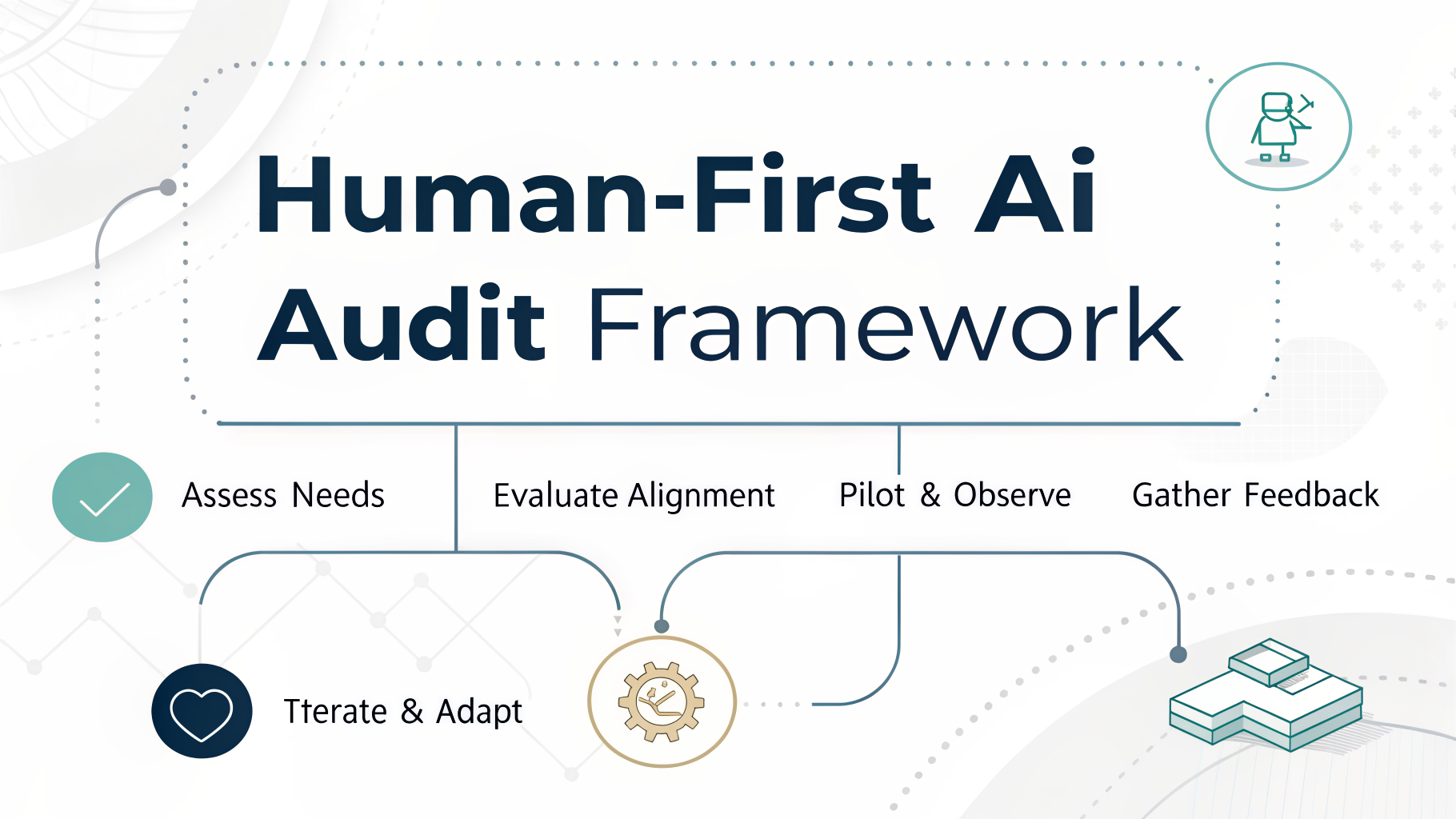
Many early childhood educators in provinces like Ontario and British Columbia worry that artificial intelligence (AI) will diminish the essential human connection vital for child development. This concern often stems from a lack of clear, actionable guidance on how to evaluate AI tools. Instead of passively accepting new technologies, ECEs must become proactive evaluators. The Human-First AI Audit framework empowers Canadian ECEs to systematically assess, select, and continuously monitor AI tools, ensuring they genuinely amplify human interaction rather than replace it. This framework provides a structured decision-making matrix. For instance, an ECE in a mid-sized urban daycare considering an AI-powered observation tool, such as YochienAI, would evaluate it against criteria like its ability to free up educator time for direct child engagement, its data privacy protocols, and its integration with existing play-based learning philosophies. This rigorous assessment prevents the adoption of tools that might inadvertently increase screen time or reduce spontaneous "serve and return" interactions, which research confirms are crucial for early brain development. By engaging in real-world scenarios, ECEs can practice applying this framework, moving from confusion to confident, informed choices about AI adoption. The framework also supports continuous evaluation, recognizing that both children's needs and AI capabilities evolve. A senior kindergarten teacher in Halifax, for example, might re-evaluate an AI language learning app after six months to ensure it still fosters conversational skills without dominating interaction time. This ongoing vigilance ensures that technology remains a powerful assistant, allowing ECEs to focus on the irreplaceable human elements of
While fears persist about technology eroding human connection in early learning, AI's most impactful role is often behind the scenes: empowering Early Childhood Educators (ECEs) to reclaim time and deepen their direct interactions with children. The real innovation isn't AI teaching children, but AI assisting educators, allowing them to focus on the irreplaceable human element of early childhood development. The core challenge for Canadian ECEs integrating AI is not just choosing tools, but actively mitigating risks to social-emotional development and managing screen time. While AI offers efficiencies, the irreplaceable "serve and return" interactions critical for brain development in the first five years require a human touch. Many educators in Ontario's JK/SK programs voice concerns that digital tools could inadvertently diminish these vital exchanges, especially with the projected 30%+ annual growth of the AI in education market suggesting increased presence of such technologies. To combat this, ECEs must implement strict guidelines for intentional, supervised, and interactive technology use. A senior kindergarten teacher in Halifax might use an AI-assisted observation tool like YochienAI to streamline record-keeping, thereby freeing up more time for direct interaction, rather than using child-facing AI for instruction. This approach aligns with findings from studies on screen time and young children, which emphasize active engagement over passive consumption. The goal is always to balance AI's utility with ample opportunities for unstructured play, peer interaction, and outdoor exploration, foundational elements of the Council of Ministers of Education, Canada's recommendations for holistic child development. Navigating these concerns requires a proactive, "Human-First AI: How Canadian ECEs Can Ensure Technology Supports,
Navigating the unique Canadian early childhood education (ECE) landscape with AI tools means understanding existing provincial policies and available resources. A “Human-First AI” approach demands that technology enhances, rather than diminishes, the crucial human interactions foundational to early brain development, as emphasized by organizations like the Council of Ministers of Education, Canada (CMEC). Familiarize yourself with your province’s specific ECE curriculum frameworks (e.g., Ontario’s How Does Learning Happen? or BC’s Play-Based Learning). These often prioritize play-based learning and holistic child development, setting ethical boundaries for AI integration. Explore resources from bodies like CMEC, which offer insights into technology in education and child well-being. While not AI-specific, their principles guide thoughtful tech use in Canadian early learning environments. Seek out Canadian-focused professional development on human-centred AI in ECE. For instance, workshops in Alberta might cover how AI-assisted observation tools like YochienAI can free up educators for more direct child interaction. Connect with other Canadian ECEs through provincial associations or online forums. Sharing experiences, such as how a daycare in Montreal uses AI for administrative tasks, helps balance AI benefits with human interaction. Understand Canadian privacy laws like PIPEDA. Ensure any AI tool, especially those handling children’s data, offers robust security. Review privacy pages from providers (e.g., YochienAI's
The true irony of AI in early childhood education isn't its potential to replace humans, but its capacity to make human connection even more central. As the global AI in education market projects a compound annual growth rate (CAGR) of over 30% through 2030, Canadian ECEs face a critical juncture: ensuring this growth benefits, rather than harms, early childhood development. This means evolving practice to integrate technology thoughtfully, without compromising core developmental principles like responsive "serve and return" interactions. Ongoing support and professional development are vital for educators. A senior kindergarten teacher in British Columbia, for instance, needs training not just on how to use a tool like YochienAI for observation, but on how that tool frees up time for more direct, meaningful engagement with children. This requires a shift in mindset, viewing AI as an assistant for administrative tasks or data analysis, thereby amplifying the educator's capacity for human interaction. Parents and the wider community play a crucial role in advocating for ethical AI implementation. They must demand transparency and insist that technology choices prioritize children's social-emotional well-being over mere novelty. By collectively embracing the principles of Human-First AI: How Canadian ECEs Can Ensure Technology Supports, Not Replaces, Early Childhood Development Human-first AI in Canadian ECE means technology serves to amplify human educators, not diminish their role. It prioritizes child development, well-being, and relationships, using AI for administrative support like scheduling or drafting reports. This frees up educators in settings like a Winnipeg daycare to engage more deeply with children, ensuring AI remains a background tool that enhances, rather than dictates, learning experiences. Canadian ECEs should seek AI tools that align with provincial frameworks like Ontario's ELECT or BC's Early Learning Framework. Look for evidence-based design, transparent data handling, and minimal direct child interaction. For instance, an AI tool that analyzes educator observation notes for developmental patterns, rather than one directly 'teaching' a child, truly supports professional practice and child-led learning. Human interaction is fundamental for social-emotional development, empathy, and language acquisition in early childhood. AI, lacking genuine empathy or nuanced responsiveness, cannot replicate the bond formed with a caring educator. A child learns conflict resolution through guided peer interaction in a Nova Scotia pre-primary program, a complex social dynamic AI cannot facilitate, underscoring the irreplaceable role of human connection. Yes, AI can significantly boost educator capacity by automating routine tasks. Tools can summarize daily observations, generate draft parent communications, or suggest activity ideas aligned with specific learning outcomes. For a kindergarten teacher in Calgary, this means less time on paperwork and more time facilitating play-based learning, improving overall practice efficiency and allowing greater focus on individual child needs. While no specific federal or provincial 'AI in ECE' policies exist in Canada, existing privacy legislation like PIPEDA and provincial equivalents (e.g., BC's PIPA) govern data use. Provincial licensing bodies, such as those overseeing childcare in Quebec, indirectly regulate technology by emphasizing child safety, well-being, and screen-time guidelines. Best practices currently emerge from ECE frameworks, advocating for thoughtful, developmentally appropriate integration. Making Smart Choices for Canadian ECE: How to Evaluate AI Tools with Critical Thinking often means looking past the marketing hype to understand what AI actually does. The true value in early learning isn't just adopting new tools, but discerning their alignment with play-based learning and holistic development. Human-Centred AI (HCAI) in Canadian early childhood education (ECE) isn't about complexity; it's about intentional simplicity. It aims to augment educator observation skills and deepen parent engagement, ensuring technology serves children's developmental needs. Canadian ECEs face an overwhelming influx of new AI tools, many ill-suited for young children's unique developmental needs. This demands a structured approach to prevent pedagogical missteps and privacy breaches as the AI in education market skyrockets.A Practical Framework: Auditing AI for Human-Centred Integration
A Practical Framework: Auditing AI for Human-Centred Integration
Empowering ECEs: Leveraging AI to Enhance Educator Capacity and Interaction
Empowering ECEs: Enhancing Educator Capacity and Interaction
AI Amplifies ECE Strengths
Potential Pitfalls to Avoid
Addressing Concerns: AI's Impact on Social-Emotional Development and Screen Time

Addressing Concerns: AI's Impact on Social-Emotional Development and Screen Time
"Our priority isn't just what the AI can do, but what it allows us, the educators, to do more of: connect deeply with each child." — kindergarten administrator, Toronto
The Canadian ECE Landscape: Policies, Resources, and Best Practices for Thoughtful AI Use
Canadian ECE AI Quick Reference
Building a Future Where Technology Amplifies Human Potential in Early Learning
Building a Future Where Technology Amplifies Human Potential in Early Learning
Frequently Asked Questions
What does human-first AI mean for early childhood education in Canada?
How can Canadian ECEs identify AI tools that truly support child development?
Why is it important for AI in ECE to enhance, not replace, human interaction?
Can AI help Canadian ECE educators improve their capacity and daily practices?
Are there specific Canadian policies or best practices for using AI in early learning?
Frequently Asked Questions
What does human-first AI mean for early childhood education in Canada?
How can Canadian ECEs identify AI tools that truly support child development?
Why is it important for AI in ECE to enhance, not replace, human interaction?
Can AI help Canadian ECE educators improve their capacity and daily practices?
Are there specific Canadian policies or best practices for using AI in early learning?
Keep reading
All articles →Smart Choices for Canadian ECE: Evaluate AI Tools Critically
Designing for Little Hands and Big Hearts: Human-Centred AI in Canadian ECE
Before You Click: 8 Essential Questions Canadian ECEs Should Ask About New AI Tools


