
Putting People First: A Canadian ECE's AI Stewardship Playbook
Ensuring AI tools remain human-centred in Canadian early childhood education requires understanding AI as an augmentative force, not a replacement for human connection. Its true value lies in freeing up educators for richer, more responsive human interactions.

Understanding Human-Centred AI in Early Childhood Education: Beyond the Buzzwords
Understanding Human-Centred AI in Early Childhood Education: Beyond the Buzzwords
Ensuring AI tools remain human-centred in Canadian early childhood education isn't about mere integration; it requires a proactive commitment to understanding AI as an augmentative force, not a replacement for human connection. While many discussions focus on AI's capacity for personalization, the more profound, non-obvious truth is that its true human-centred value lies in *freeing up* educators to provide richer, more responsive human interactions, precisely because the AI handles routine tasks. Many early childhood educators in Canada have expressed concern about AI's potential impact on social-emotional development in young children.
Human-centred AI in early learning settings means technology designed to enhance the capabilities of educators and the developmental experiences of children, keeping human interaction paramount. It's about AI serving the unique needs of a junior kindergarten student in Winnipeg, perhaps by streamlining observation notes, so their teacher can spend more time engaging directly with them during free play. Tools like YochienAI, for example, assist with observation and developmental insights, allowing educators to focus on nuanced child interactions rather than extensive manual record-keeping.
This approach directly counters the fear that AI tools will diminish the essential human connection crucial for early childhood development. Instead, it frames AI as a support system. Consider an ECE in rural Alberta who uses an AI-powered tool to quickly generate individualized learning activity ideas based on a child's observed interests. This doesn't replace their pedagogical expertise; it amplifies it, allowing them to dedicate more energy to fostering empathy, problem-solving, and social skills through direct engagement. Early childhood development research consistently shows that rich, responsive human interaction is paramount for brain development and social-emotional learning, a principle human-centred AI must uphold.
Prioritizing human-centred AI means asking how a tool will strengthen the bonds between children and educators, how it will support a child's holistic development, and how it will reduce administrative burdens for staff in a daycare in Nova Scotia. It's about ensuring technology supports, rather than overshadows, the invaluable human element that defines quality early childhood education.
Why 'People First' Matters: Core Principles for Canadian ECEs
Why 'People First' Matters: Core Principles for Canadian ECEs
The conversation around AI in early childhood education often overlooks a critical irony: the more advanced the technology becomes, the more vital our human-centred principles become. It’s not enough to simply adopt AI; Canadian ECEs must actively steward its use to amplify, not diminish, the core human interactions that define early learning. Many Canadian ECEs worry about AI's potential impact on social-emotional development, underscoring this tension directly. This concern requires a foundational framework built on human connection. Prioritizing a child's holistic development means ensuring AI supports social-emotional, cognitive, and physical growth without displacing essential human interaction. For example, while AI tools can flag developmental patterns, a senior kindergarten teacher in Halifax still provides the comfort, direct instruction, and nuanced social cues a child needs. The Canadian government's 2021 'Trustworthy AI' principles, which stress human oversight, privacy, and accountability, offer a direct parallel for ECEs. Integrating these principles means an AI tool like YochienAI, designed to assist with observation, should free up an educator's time for more direct engagement, not reduce it. The core principles for "Putting People First: How Canadian Early Childhood Educators Can Ensure AI Tools Remain Human-Centred" demand that AI remains a servant to pedagogy, not its master. This stewardship requires a practical approach to selection and integration, which the next section will explore.Practical Strategies for Selecting Human-Centred AI Tools: A Canadian Lens
Selecting AI tools for early learning requires more than just reviewing features; it demands a critical Canadian lens focused on pedagogical alignment, developmental appropriateness, and robust data stewardship. Many early childhood educators (ECEs) feel uncertain about integrating new technologies without compromising child safety or the essential human connection, a concern shared by many Canadian ECEs about AI's possible impact on social-emotional development.
Develop a Clear Evaluation Framework
Before considering any tool, establish criteria based on your program's philosophy. Does the AI tool support play-based learning, as emphasized in Ontario's How Does Learning Happen? framework? Is it genuinely developmentally appropriate for toddlers or preschoolers, or does it push rote learning? For example, an AI-assisted observation tool like YochienAI should clarify how it helps educators see children more clearly, rather than replacing direct observation.
Prioritize Data Privacy and Security
Children's data is highly sensitive. Ensure any AI tool vendor complies with Canadian privacy regulations, specifically the Personal Information Protection and Electronic Documents Act (PIPEDA). Verify their data encryption protocols, storage locations (preferably within Canada), and anonymization practices. For instance, reputable providers like YochienAI detail their privacy policy and security measures publicly at yochienai.ca/privacy and yochienai.ca/security.
Implement Piloting and Feedback Loops
Never roll out a new AI tool program-wide without a trial. Pilot the tool with a small group of educators, children, and parents. For example, a childcare centre in Vancouver might trial YochienAI for schools in one classroom for a month, gathering specific feedback on usability, impact on educator workload, and children's engagement.
Integrating AI Responsibly: Maintaining Human Connection in the Classroom

Integrating AI Responsibly: Maintaining Human Connection in the Classroom
The greatest irony of integrating artificial intelligence (AI) into early childhood education is that its true value isn't in replacing human interaction, but in amplifying it. Many Canadian early childhood educators (ECEs) worry that AI tools will diminish the essential human connection vital for development. However, the educator's role shifts from content deliverer to active mediator, ensuring technology serves to deepen, not dilute, the human element in learning.
Intentional integration means using AI purposefully. Rather than passively engaging children with a tablet, an ECE in a Calgary daycare might use an AI-powered storytelling app to introduce new vocabulary. Immediately after, the educator leads a group discussion, asking children to retell the story in their own words or act out scenes. This balances technology with crucial human interaction, fostering both language skills and collaborative play.
Designing for interaction is key. Tools like YochienAI, which offers AI-assisted observation and developmental insights, can identify a child's emerging interests or potential needs. For instance, if YochienAI highlights a preschooler in Nova Scotia struggling with emotional regulation, the ECE doesn't simply rely on the data. Instead, they follow up with targeted, human-led interventions: one-on-one check-ins, guided play to practice sharing, or reading books about feelings. This ensures AI supports the educator in fostering social-emotional skills, but the emotional support itself remains firmly human-centred.
The educator acts as a guide, fostering critical thinking by prompting children to question what they see and hear from AI tools. By actively mediating interactions and structuring activities that prioritize peer-to-peer and child-educator engagement, Canadian ECEs embody the core principle of Putting People First: How Canadian Early Childhood Educators Can Ensure AI Tools Remain Human-Centred, making technology a true partner in nurturing young minds.
Monitoring and Adapting: Ensuring Ongoing Human-Centredness and Ethical Use
Monitoring and Adapting: Ensuring Ongoing Human-Centredness
Adopting AI tools is not a one-time decision; it requires continuous vigilance to ensure they genuinely support early childhood development without diminishing human connection. While the Canadian government's "Trustworthy AI" principles provide a high-level framework, specific, actionable guidelines for ECE post-adoption are still emerging. This gap means educators in provinces like British Columbia or Nova Scotia must establish their own audit frameworks. Few Canadian ECE programs have formal policies for ongoing AI tool evaluation.
Establishing continuous feedback loops is critical. A senior kindergarten teacher in Halifax, for example, might collect weekly input from children about their interactions with an AI-powered storytelling app, noting changes in their collaborative play or imaginative language use. Educators also need systematic ways to gather input from parents and colleagues on the AI's impact on learning, interaction, and even their own workload. Qualitative observations, like changes in a child's social-emotional responses, are as vital as quantitative metrics, such as engagement duration with a specific learning module.
This ongoing assessment directly informs adaptation. If an AI-assisted observation platform like YochienAI, designed to help educators see every child more clearly, begins to show unintended consequences, the ECE team must be prepared to modify its use or even discontinue it. This proactive approach ensures that the technology consistently aligns with the core principles of Putting People First: How Canadian Early Childhood Educators Can Ensure AI Tools Remain Human-Centred.
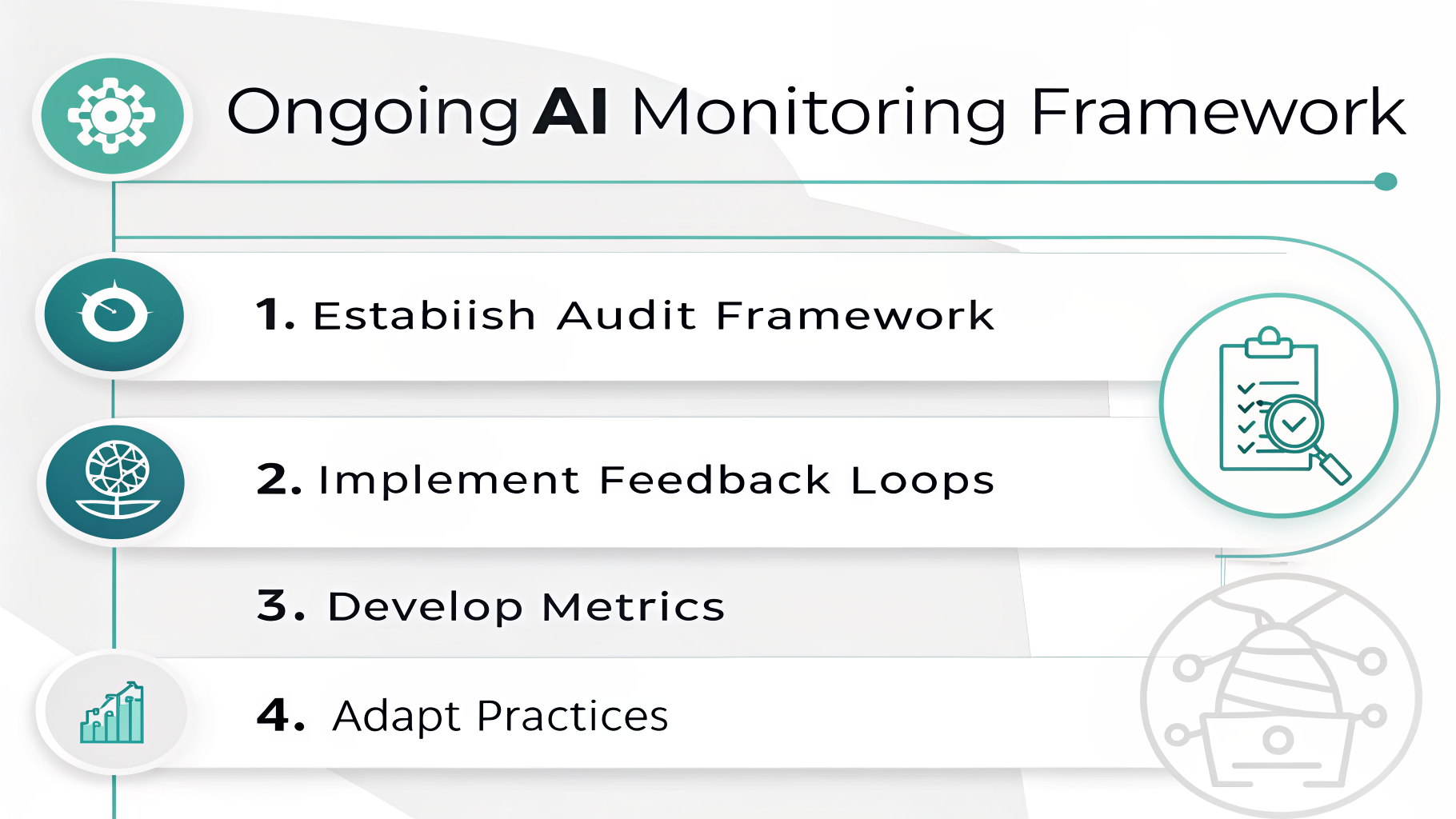
By treating AI integration as an iterative process, Canadian ECEs can maintain control, ensuring that tools remain subservient to pedagogical goals and child well-being, rather than dictating them.
Addressing Ethical Concerns and Bias in AI for Young Children: Proactive Approaches
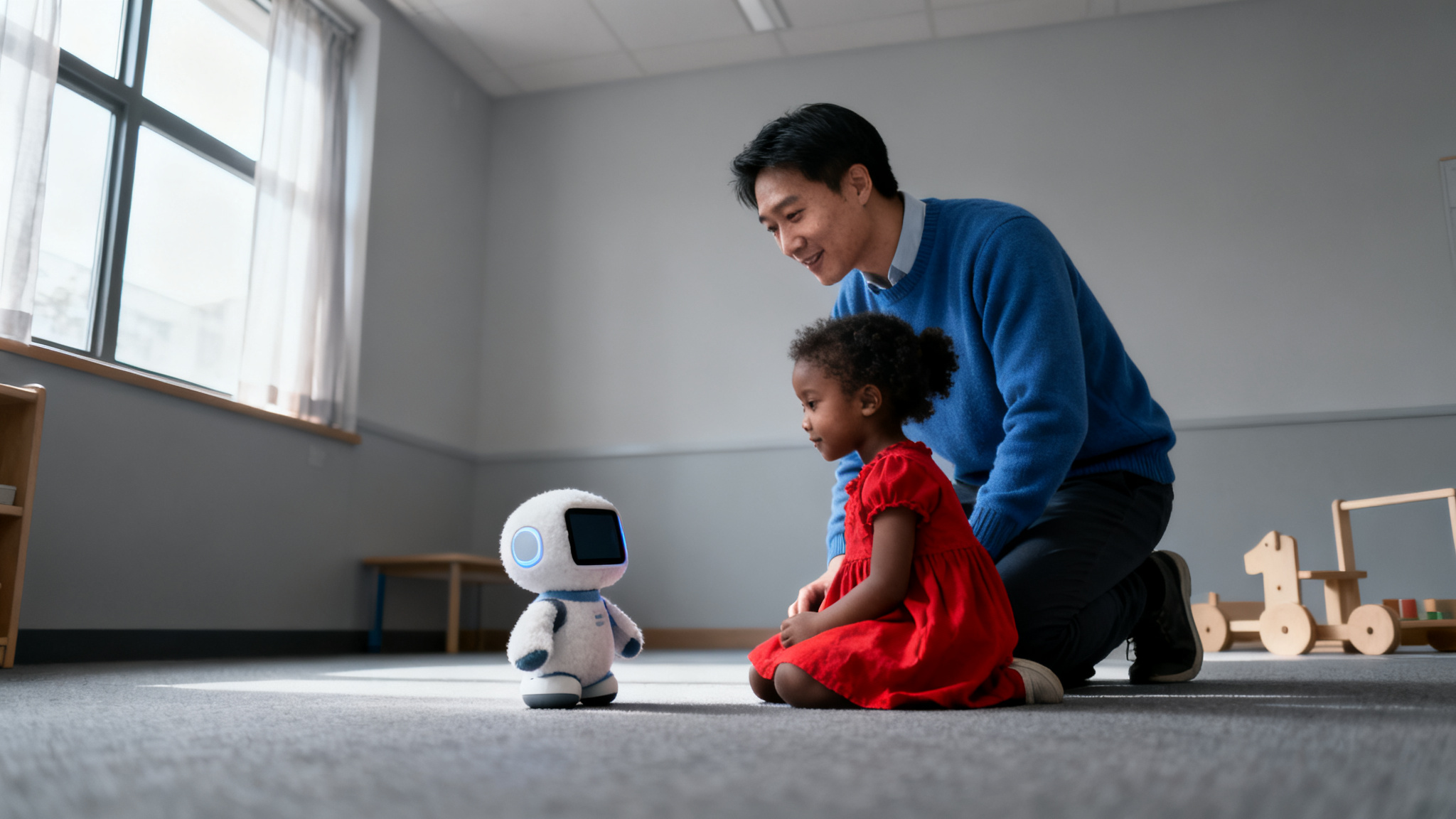
The true challenge for Canadian early childhood educators isn't just selecting AI tools, but actively managing their ethical implications long after adoption. Many fear AI will diminish the essential human connection, a valid concern given that many early childhood educators in Canada worry about AI's impact on social-emotional development in young children. Proactive strategies are essential for Putting People First: How Canadian Early Childhood Educators Can Ensure AI Tools Remain Human-Centred, especially in areas like data privacy, algorithmic bias, and equitable access.
Robust data privacy protocols must be non-negotiable. This means strict adherence to Canadian privacy laws, like PIPEDA, when collecting, storing, and using children's data. For instance, an AI-assisted observation tool like YochienAI explicitly outlines its data handling practices in its privacy policy, detailing data anonymization and secure storage within Canada. Transparency with parents about what data is collected and how it's used is paramount. Without clear policies, AI tools risk eroding trust and potentially exposing sensitive information.
Mitigating algorithmic bias requires ongoing vigilance. AI systems learn from data, and if that data reflects societal biases, the AI will perpetuate them. For example, a speech recognition AI trained predominantly on adult voices may struggle to accurately interpret a child's speech, particularly those with diverse linguistic backgrounds or speech impediments. ECEs must regularly audit AI tools, asking developers for transparency on training data and actively testing for representativeness. This prevents the tools from inadvertently creating inequities in learning opportunities for children from marginalized groups or those with special needs.
Equitable access is another critical component. This growth must not widen existing educational gaps. A daycare in rural Manitoba might lack the internet infrastructure or budget to implement the same AI tools as a well-funded urban centre in Ontario. Strategies must focus on providing all children with fair access to beneficial AI tools that support child development in Canada, regardless of socio-economic background or special needs. This could involve government subsidies for technology, open-source AI educational tools, or prioritizing tools that function effectively with minimal infrastructure.
Fostering digital literacy for both educators and children is the final proactive step. Educators need to understand how AI works, its limitations, and how to critically evaluate its outputs. This builds resilience against over-reliance and helps them mediate children's interactions responsibly. For children, age-appropriate introductions to AI concepts—like how a tablet "learns" their preferences—can begin to build a foundational understanding of technology's role and limitations, preparing them for a future where AI is commonplace.
Communicating with Parents and Stakeholders About AI Use: Building Trust and Transparency
Communicating About AI Use: Building Trust and Transparency
Many early childhood educators in Canada find themselves in the surprising position of needing to explain artificial intelligence (AI) to parents, even as they learn about it themselves. This creates a critical need for transparent, proactive communication strategies that address common anxieties head-on, particularly fears about diminished human connection and increased screen time. Many Canadian early childhood educators have expressed concern about AI's potential impact on social-emotional development in young children, a sentiment often shared by families.
To foster trust, early learning programs should develop clear, accessible explanations of any AI tools adopted. For instance, if using an AI-assisted observation platform like YochienAI, explain that the “AI” refers to algorithms that help educators organize notes and identify developmental patterns, not a robot teaching children. Provide specific examples: “This tool helps a senior kindergarten teacher in Edmonton review observations from the week more efficiently, freeing up time for direct, personalized interaction with each child.” Resources tailored for families, such as those found at YochienAI's parent section, can be invaluable.
Institutions must also share their policies on AI use, data privacy, and ethical guidelines with all stakeholders. This might involve a simple, one-page summary outlining how a tool like a smart-schedule generator for staff shifts uses anonymized data, or how an AI-powered story prompt generator enhances creativity without replacing human storytelling. This transparency directly aligns with the Canadian government's 'Trustworthy AI' principles (2021), which emphasize human oversight, privacy, and accountability. Only a small share of Canadian ECE programs currently have formal policies for AI tool evaluation, highlighting a significant gap.
Equipping educators with the language and data to advocate for thoughtful AI integration is crucial for “Putting People First: How Canadian Early Childhood Educators Can Ensure AI Tools Remain Human-Centred.” This means emphasizing that human-centred AI tools are selected precisely to enhance, not detract from, the rich, responsive human interaction that early childhood development research consistently shows is paramount for brain development and social-emotional learning.
The Future of Human-Centred AI in Canadian Early Learning: Opportunities and Challenges
The Future of Human-Centred AI in Canadian Early Learning: Opportunities and Challenges
The true challenge for Canadian early childhood educators isn't preventing AI's arrival, but rather consciously shaping its role within the classroom. While projections suggest the global AI in education market could grow substantially.By 2030, the critical task is to ensure this growth aligns with the foundational principles of early childhood development, prioritizing human connection above all else.Potential Benefits for ECEs
- Enhanced Observation: AI-assisted tools, like YochienAI, can help educators document and analyze child development patterns more efficiently, freeing up time for direct interaction.
- Personalized Learning Support: AI can identify individual learning styles or developmental needs, allowing educators to tailor activities more precisely for each child in a class of 24 four-year-olds in Calgary.
- Reduced Administrative Burden: Automated tasks, such as generating reports or updating parent communications, can significantly decrease educator workload, letting them focus on pedagogical engagement.
- Data-Driven Insights:
Ongoing Human-Centred Challenges
- Maintaining Human Connection: Many Canadian ECEs are concerned about AI's impact on social-emotional development, highlighting the risk of diminishing vital human interaction.
- Algorithmic Bias: AI models trained on unrepresentative data can perpetuate or amplify biases, potentially misidentifying developmental needs in children from diverse cultural backgrounds in Montreal.
- Data Privacy and Security: Protecting sensitive child data remains paramount, requiring robust policies and vigilance against breaches, especially with tools handling personal observations.
- Over-reliance and Deskilling: Excessive dependence on AI for tasks like assessment could reduce an educator's critical observation skills or intuitive understanding of children's cues over time.
Frequently Asked Questions about Human-Centred AI in ECE
Many early childhood educators in Canada feel a tension: the pressure to explore new technologies balanced against a deep commitment to child-centred, play-based learning. Here are direct answers to common questions about keeping AI tools truly human-centred in ECE settings.
Quick Reference: Human-Centred AI in ECE
It means AI serves the child and educator, not the other way around. For a senior kindergarten teacher in Edmonton, this might look like an AI-assisted observation tool that flags developmental milestones, freeing educators to engage directly with children rather than spending hours on manual documentation.
No. Human-centred AI enhances, not diminishes, interaction. Many Canadian ECEs worry about AI's impact on social-emotional development. The goal is to use AI for administrative tasks, allowing educators more time for responsive caregiving and direct engagement, which research consistently shows is paramount for brain development.
Canadian privacy laws like PIPEDA (federally) and provincial equivalents (e.g., Alberta's PIPA) are crucial. Tools must anonymize data where possible, gain explicit consent, and have robust security. Always ask providers, like YochienAI, about their data handling and adherence to Canadian privacy standards, which often exceed those in other jurisdictions.
Transparency is key. Explain why you're using a tool (e.g., "to give us more time for play-based learning," "to track progress more accurately"). Focus on the benefits for their child's learning journey and how the tool supports, rather than replaces, your professional judgment. Share your centre's privacy protocols clearly.
Yes. The Canadian government's 'Trustworthy AI' principles (2021) emphasize human oversight, privacy, and accountability. While not ECE-specific, these principles provide a strong framework. Only a small share of Canadian ECE programs currently have formal AI policies, indicating a need for more localized adaptation of these national guidelines.
AI should streamline, not complicate.
Frequently Asked Questions
What is human-centered AI in early childhood education?
How can Canadian ECEs choose AI tools that prioritize children?
Why is it important for AI in ECE to be human-centered?
Can AI tools maintain human connection in a Canadian early learning classroom?
Is AI in early childhood education ethical for young children?
Keep reading
All articles →
Human-Centred AI in Daycare: One Day, Rules, Sample Policy
Human-centred AI in an early learning centre is a working rule: software can assist, but a named educator decides every choice about a child. This guide shows how that plays out day to day, from reviewing automated reports to writing a short family-friendly policy.
A Practical Checklist for Canadian ECEs Evaluating AI Tools
Most AI guidance treats every tool the same way, which is why evaluations stall. This checklist sorts each tool into a lane first, so Canadian ECEs can decide what to ask vendors and when AI belongs in the classroom.

Putting Children First: A Parent's Guide to Human-Centred AI in Canadian ECE
The true irony of "putting children first" in ECE isn't protecting children from AI, but ensuring they aren't passive data points. This involves designing AI tools that prioritize a child's holistic development, well-being, and safety in the unique Canadian context.